
Football Injury Rehabilitation and Performance Support
Football is the most common sport in the UK — and also one of the highest-risk for injury. Hamstring strains, ankle sprains, knee ligament injuries and groin problems are all part of the game at every level, from Sunday League to semi-professional.
At ADAPT. PERFORM., I work with footballers across Bristol — supporting recovery from acute injuries, rehabilitation after surgery, and the gradual return to full match fitness. Just as importantly, I help players reduce their injury risk in the first place through pre-season movement screening, strength profiling and off-season conditioning programmes.
Based in St Paul's, Bristol BS2, I work with players at every level — from amateur Sunday League and university football through to academy, semi-professional and adult football across Bristol and surrounding areas.
Not sure what to expect at your first appointment? Find out here →
Football Injuries I Treat
Football creates a specific set of demands — repeated sprints, sudden changes of direction, cutting and pivoting, kicking, heading, contact and tackle impact. These demands lead to a predictable pattern of injuries:
Lower limb injuries
Hamstring strains — the single most common football injury, particularly during sprinting
Groin and adductor pain — from cutting, kicking and repeated change of direction
ACL and knee ligament injuries — typically from non-contact pivoting, awkward landings or direct impact
Meniscus injuries — often alongside knee ligament injuries
Ankle sprains — lateral ankle sprains are extremely common; chronic instability follows if rehab isn't completed
Calf and Achilles injuries — from sprinting and explosive push-of
Hip flexor strains
Inguinal hernia and sports hernia presentations
Adductor tendinopathy
Contact injuries
Dead legs (quadriceps contusions) and haematomas
Rib, chest and shoulder injuries from tackles
Concussion — managed in collaboration with medical teams where required
Overuse
Osteitis pubis and stress reactions in high-volume training
Tendinopathies — particularly patellar, Achilles and adductor
Lower back pain from repeated rotational and kicking load
Each injury has specific rehabilitation requirements — but the common thread across football injuries is that return to play requires more than ‘being pain-free.’ The game demands repeat sprinting, change of direction under fatigue, and contact tolerance. Rehabilitation must reflect that.
Return to Play — Earned, Not Assumed
Amateur and semi-professional football runs on a short timeline. Midweek training, weekend matches, and often a desire to get back for the next fixture — these pressures can push players back onto the pitch before they're genuinely ready.
I don't work to the fixture calendar. I work to criteria.
Return to play isn't return to training
Most footballers equate ‘being able to train’ with ‘being fit to play.’ They're not the same thing. Training sessions are controlled — repeatable drills, known intensities, usually pre-planned. Match play is chaotic — repeated maximal sprints, unpredictable direction changes, contact, fatigue in the later stages, and moments that demand maximal explosive effort.
Returning to training before match play is the right order. But even that isn't a final step — it's a progression to be earned.
What I look for before clearing return to football
Beyond basic symptom settling, before clearing someone to return to match play I look for:
Full strength symmetry across the injured region — measured by dynamometry, not estimated
Repeat sprint tolerance — the ability to run at near-maximal effort multiple times with limited recovery, which is the core demand of football
Change of direction under fatigue — being able to cut and accelerate when tired, not just when fresh
Contact tolerance where relevant — testing whether the injured region tolerates tackling, aerial challenge or physical contest
Psychological readiness — confidence in the injured area, particularly after ligament injuries or surgery
Full return to training, injury-free, before progressing to match minutes
For more significant injuries — ACL reconstruction, major ankle surgery, recurrent hamstring injuries — these criteria are assessed using objective testing (force plates, dynamometry, hop testing) rather than based on how someone feels. Feelings lie. Data doesn't.
I'd rather miss the next three fixtures and have you back for the rest of the season than rush you back for one match and see you reinjure.
Injury Prevention Starts Before the Injury
Most football injury content focuses on what to do after you get injured. But many football injuries are preventable — or at least their risk can be meaningfully reduced — through three things: identifying individual risk factors early, addressing them through targeted training, and structuring the training year so that players are properly prepared when competitive load arrives.
Pre-Season Movement Screening and Profiling
Pre-season is when injury risk is highest — a return to high-intensity training after an off-season break exposes gaps in physical capacity. Pre-season profiling identifies these gaps before they become injuries.
Screening and profiling typically includes:
Movement quality assessment — squat, single-leg control, hop mechanics, lunge patterns
Strength profiling by region — hamstring, quadriceps, hip strength with dynamometry or force plate data, looking for asymmetries or sub-threshold strength levels
Single-leg hop and jump testing — reactive strength, landing mechanics, symmetry between legs
Range of motion screening — ankle dorsiflexion, hip mobility, thoracic rotation
Previous injury history review — previous injuries are among the strongest predictors of future injury, particularly hamstring strains and ACL injuries
The result is a clear picture of individual risk, with specific, addressable recommendations — not generic training advice.
Learn more about performance testing and profiling →
Off-Season — The Most Important Part of Your Season
Most amateur and semi-professional footballers treat the off-season as time off. A break from training. A chance to recover. That's understandable — the season is long, physical and demanding.
But players who do nothing in the off-season lose strength, power and capacity — often substantially. When pre-season starts, they're less prepared for the load than they were before. This is a major reason pre-season carries such a high injury rate. Players arrive underprepared.
What effective off-season conditioning looks like
Off-season training isn't about grinding or replicating in-season demands. It's about building or rebuilding the physical foundations that in-season play doesn't develop:
Maximum strength work — heavy lifting (squats, deadlifts, hip thrusts, pressing) to build the strength base that underpins acceleration, deceleration, jumping and change of direction
Hypertrophy work where needed — building muscle mass, particularly in players who've lost it through a long season
Power development — progressive plyometrics, jump training, loaded power movements
Addressing asymmetries and specific weaknesses identified in end-of-season review
Aerobic base development — lower intensity running and cross-training that doesn't interfere with strength gains
Planned transitions — structured progression back into football-specific work in the weeks before pre-season so you arrive physically ready
Off-season is about arriving ready
The goal isn't to be ‘in shape’ for day one of pre-season. It's to arrive at pre-season with the physical foundation to handle the load that pre-season brings. A player who walks into pre-season with stronger glutes, better hip power, addressed asymmetries and maintained fitness is dramatically less likely to pick up an early-season hamstring strain, knee injury or groin issue than one arriving cold.
This is especially true after a significant injury in the previous season. Off-season is the critical window for completing rehabilitation, rebuilding capacity to pre-injury levels and beyond, and reducing the risk of recurrence.
Learn more about off-season strength and conditioning →
How I Assess Football Injuries in Bristol
Assessment starts with understanding the injury in the context of football — what happened, what you've lost, and what you need to get back to.
Clinical assessment
Mechanism of injury — detailed review of how the injury occurred
Symptom history and response to any treatment so far
Movement and range of motion testing
Strength testing, typically with dynamometry for objective measurement
Functional assessment — specific to the demands you're returning to
Football-specific profiling where appropriate
Single-leg hop testing for lower limb injuries
Repeat sprint ability testing
Force plate data for jumping, landing and deceleration symmetry
Asymmetry identification — crucial after lower limb injuries where the injured leg often under-loads indefinitely without specific intervention
Where further investigation is needed — imaging, specialist review, surgical opinion — I work alongside your GP, sports physician or consultant to ensure you have the full picture.
When to Seek Physiotherapy
Consider assessment if:
You've sustained an acute injury and aren't sure how to manage it
You've been told to ‘rest’ but the problem keeps coming back once you return
You've had multiple injuries in the same area (most commonly hamstring, groin or ankle)
You're returning from a significant injury or surgery and want objective guidance on readiness
You're preparing for pre-season and want to arrive properly prepared
You're in the off-season and want to use it productively for injury prevention and performance
The earlier the intervention, generally the better the outcome — particularly with tendon and recurring muscle injuries.
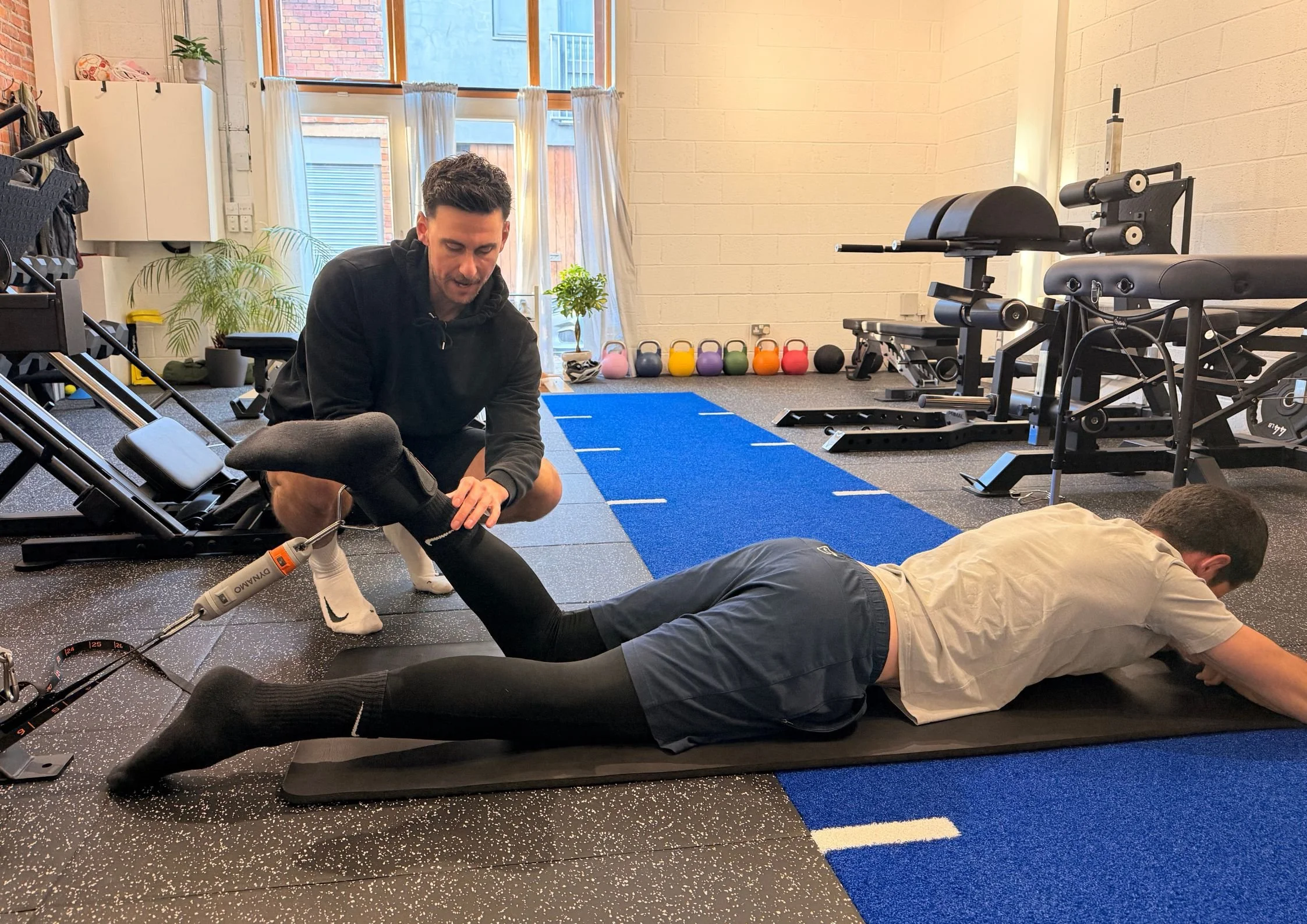
Performance Testing & Analysis
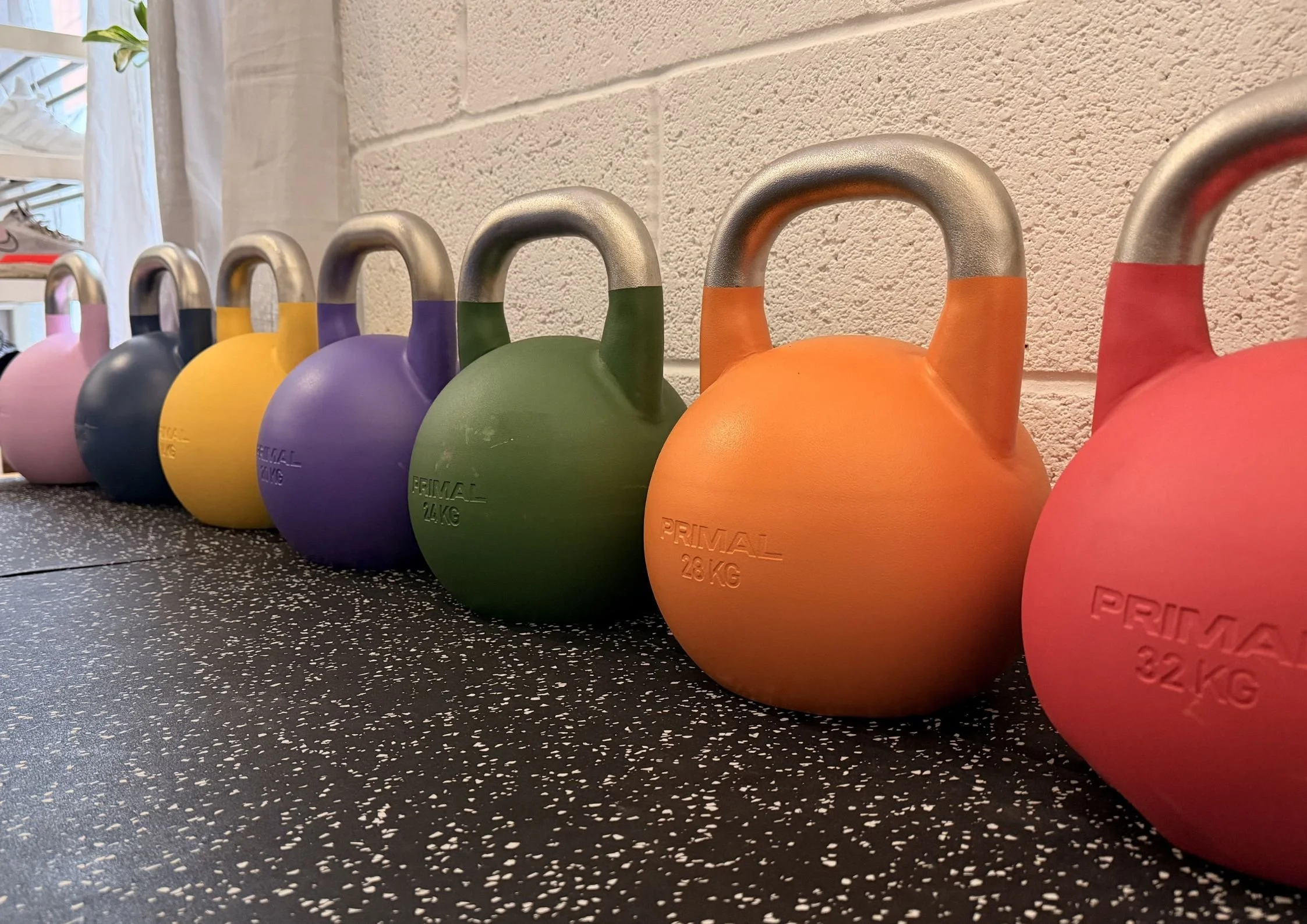
Strength & Conditioning
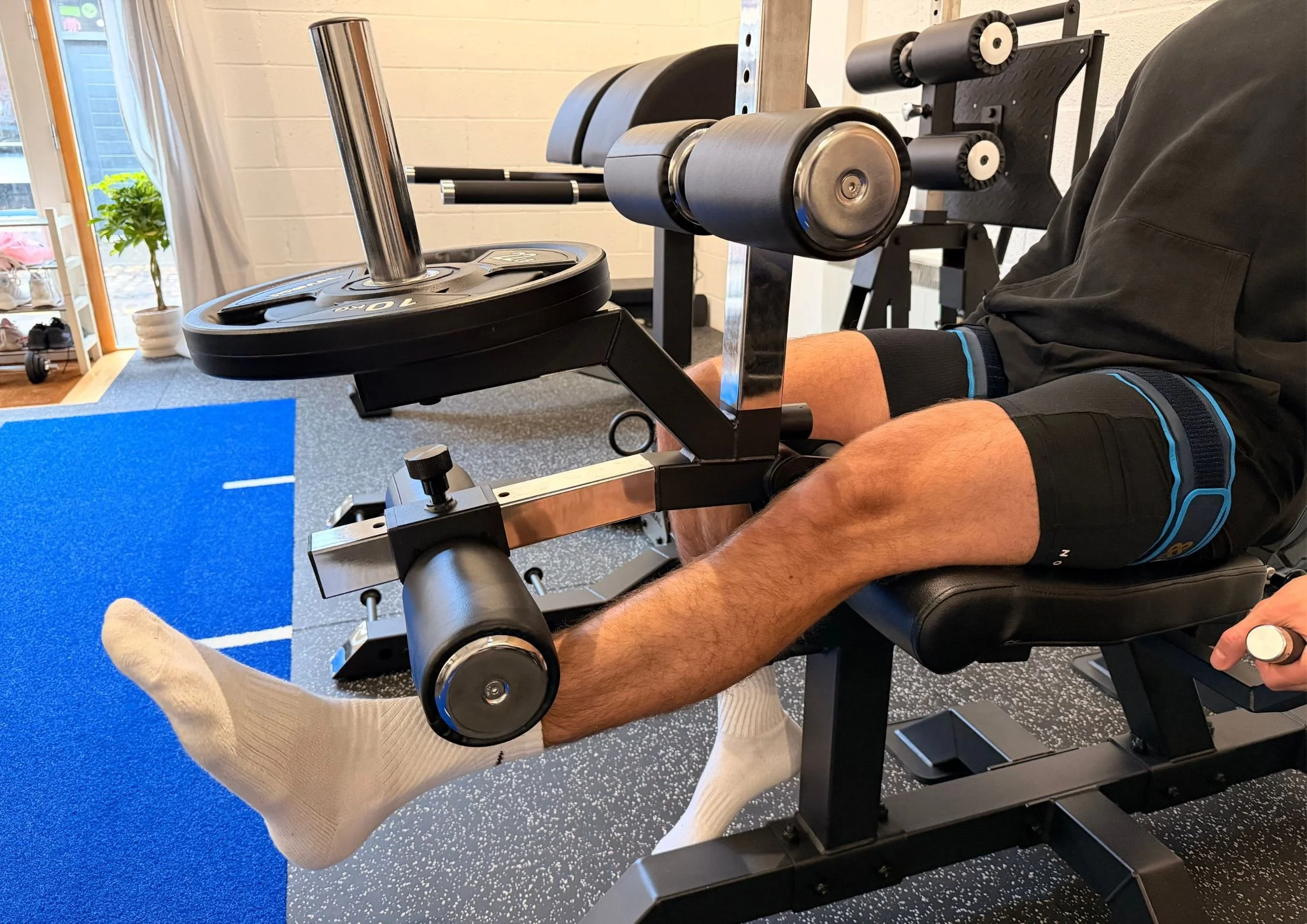
ACL Rehab
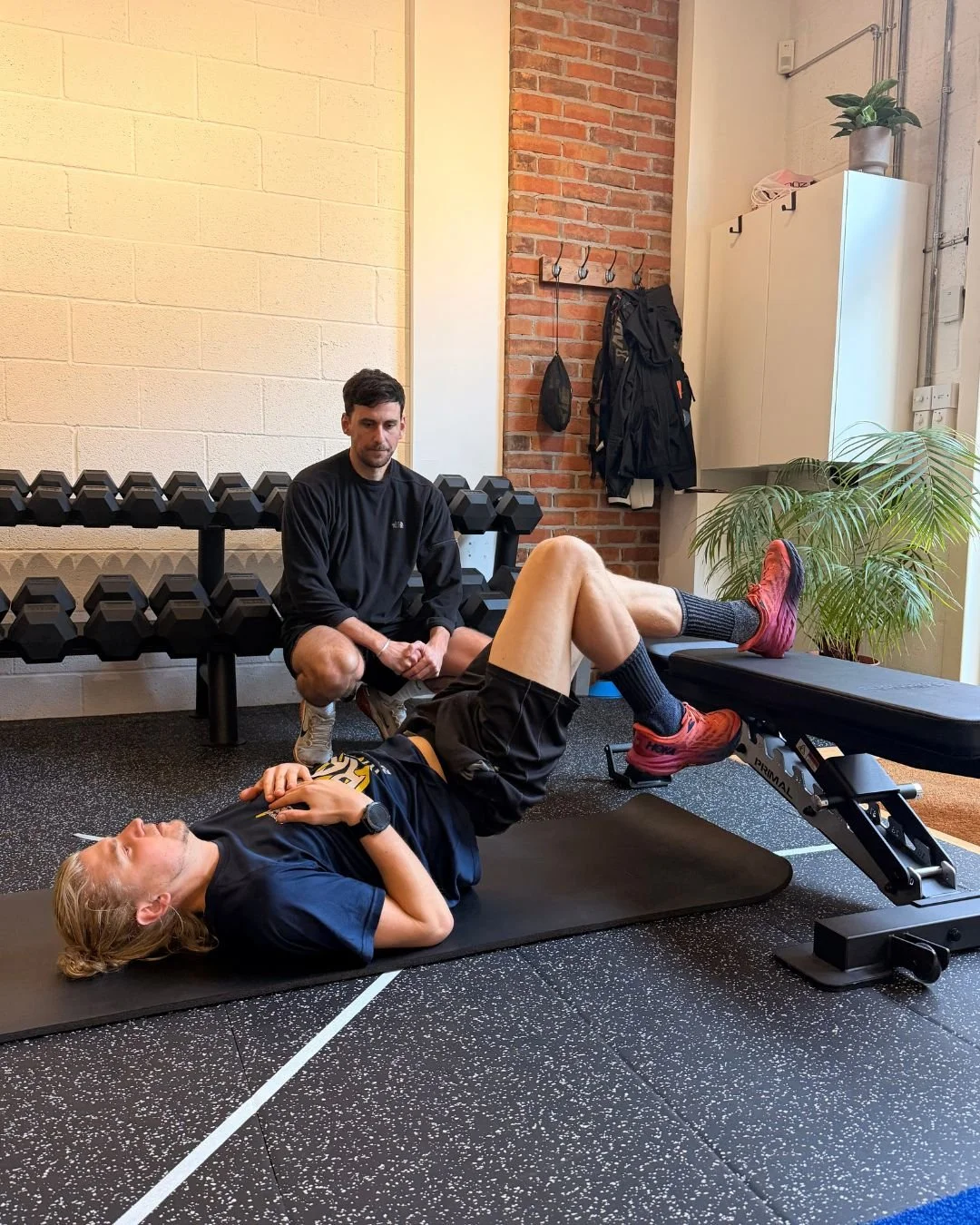
Sports Physiotherapy
Ready to Address a Football Injury — or Prevent the Next One?
Whether you're dealing with an injury that's holding you back, recovering from surgery, trying to break the cycle of recurring problems, or wanting to use this off-season properly — I can help.
Based in St Paul's, Bristol BS2, I work with footballers across the city — from amateur to semi-professional — combining injury rehabilitation, objective profiling and structured conditioning in one continuous service.
Get in touch about club partnerships or profiling packages →