
ACL Rehabilitation Bristol
Anterior cruciate ligament (ACL) injuries are among the most significant knee injuries affecting athletes and physically active individuals. They commonly occur during sports involving sudden changes of direction, pivoting movements or awkward landings.
Recovery from an ACL injury requires a structured rehabilitation process designed to restore knee stability, rebuild strength and prepare the body for a safe return to activity.
At ADAPT. PERFORM. based in St Paul's, Bristol BS2, ACL rehabilitation combines physiotherapy, progressive strength training and performance-based rehabilitation to support long-term recovery and reduce the risk of re-injury.
Rehabilitation programmes are individualised and may support individuals recovering from ACL injury both with and without surgery.
Not sure what to expect? Find out here →
What is an ACL Injury?
The anterior cruciate ligament is one of the key stabilising ligaments within the knee joint. It plays an important role in controlling forward movement and rotational stability of the tibia relative to the femur.
ACL injuries most commonly occur during:
Sudden changes of direction
Pivoting movements
Landing from a jump
Rapid deceleration
These injuries often occur in sports such as football, rugby, skiing and basketball, but can also occur during recreational activity.
ACL injuries may occur in isolation or alongside other knee injuries such as meniscus damage or other ligament sprains.
Symptoms of an ACL Injury
Common symptoms following an ACL injury include:
Popping sensation at the time of injury
Rapid swelling of the knee
Pain or difficulty weight bearing
Knee instability or giving way
Difficulty returning to sport or higher-level activity
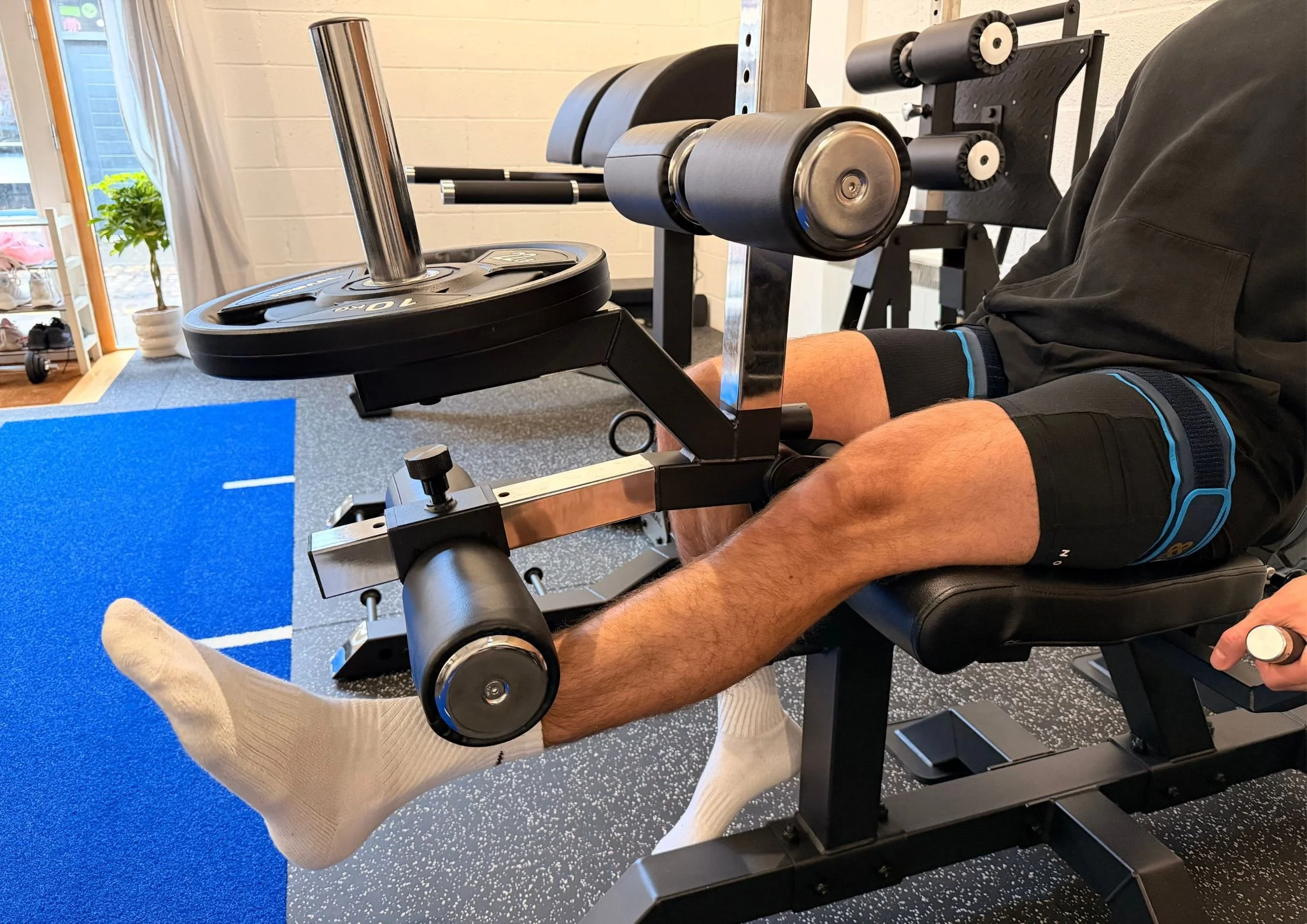
Where appropriate, I use dynamometry and force plate testing to provide objective measurement of strength symmetry, power and control. For ACL injuries specifically, these measurements become critical later in rehabilitation as the benchmark for return-to-sport decisions — quadriceps strength symmetry below 90% significantly increases re-injury risk, regardless of how the knee feels.
Physiotherapy Assessment for ACL Injuries
Assessment begins with a detailed discussion of the injury and the events surrounding it.
This subjective discussion often provides important clues as to whether the ACL may be involved.
During the discussion we may explore:
Mechanism of injury (MOI)
Whether a pop was felt or heard at the time of injury
How quickly swelling developed
The ability to continue activity after the injury
Sensations of knee instability or giving way
These details, combined with physical examination findings, help determine whether an ACL injury may be present and whether further investigation or referral is required.
Physical assessment may include:
Knee movement and range of motion
Ligament testing where appropriate
Quadriceps and hamstring strength
Single-leg movement control
Functional movement assessment
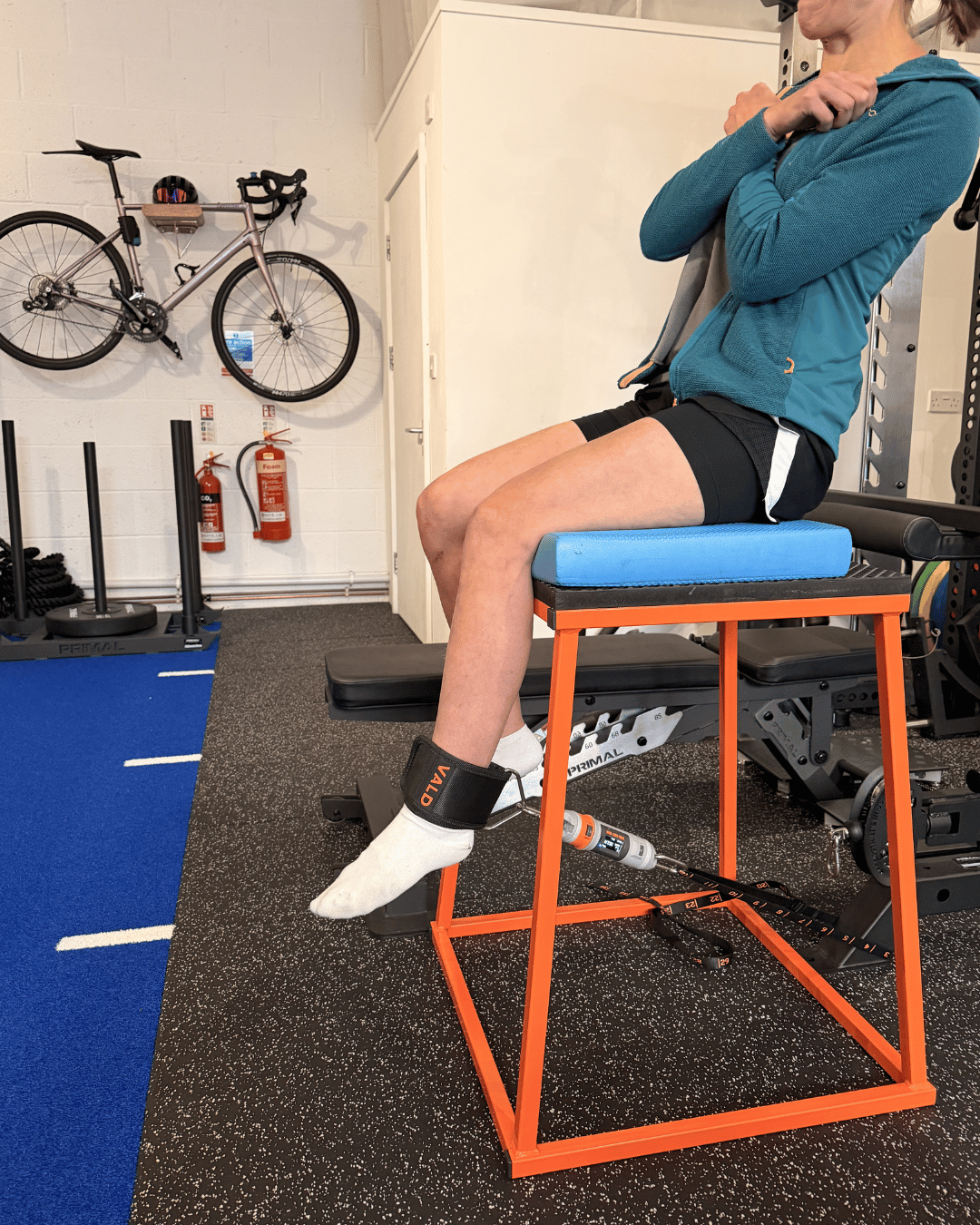
Where appropriate, I use dynamometry and force plate testing to provide objective measurement of strength symmetry, power and control. For ACL injuries specifically, these measurements become critical later in rehabilitation as the benchmark for return-to-sport decisions — quadriceps strength symmetry below 90% significantly increases re-injury risk, regardless of how the knee feels.
Surgery or Rehabilitation? An Individual Decision
ACL reconstruction is not the default answer for every ACL injury. The decision between surgical reconstruction and structured rehabilitation alone is highly individual — and importantly, it shouldn't be driven by time pressure or assumptions about what athletes "should" do.
Factors that influence the decision
Sporting demands — pivoting and cutting sports (football, rugby, netball, basketball, skiing) place much higher demand on ACL function than linear sports like running or cycling
Knee stability — some knees remain functionally stable after ACL injury through strong hamstrings, quadriceps and neuromuscular control; others continue to give way
Associated injuries — meniscal damage, especially certain patterns, may tilt the decision toward surgery
Age, activity level and personal goals — younger athletes with high-demand sporting goals often benefit from reconstruction; active individuals in lower-demand sports can often return successfully without surgery
Response to initial rehabilitation — several weeks of structured rehab often clarifies whether the knee will stabilise through strength and control, or whether instability persists
The "copers" concept
Research describes a group of individuals known as "copers" — people whose knees stabilise sufficiently through rehabilitation that they can return to sport without surgery. Identifying whether someone is likely to be a coper is part of early rehabilitation, not something that can be determined from an MRI alone.
My approach is to work with you through the initial weeks of rehabilitation before any surgical decision is finalised. This period gives a much clearer picture of how your knee is responding and whether surgery adds meaningful benefit for your situation.
If you would like to explore this in more detail, you can read my article: → ACL Reconstruction vs Rehabilitation - What Should I Choose?
Graft Choice and Impact on Recovery
For individuals undergoing ACL reconstruction, the surgeon selects a graft — tissue used to replace the torn ACL. The choice of graft is typically made by your surgeon based on a number of factors, including their experience, expertise and preferred surgical techniques with specific graft types, age, sporting goals, anatomy and injury history, and there is often more than one appropriate graft option for a given individual. The three most common options in the UK are hamstring tendon, bone-patellar tendon-bone (BPTB), and quadriceps tendon. Each has different implications for rehabilitation.
Hamstring Tendon Graft
One of the most commonly used grafts in the UK. The semitendinosus and often gracilis tendons are harvested from the back of the thigh.
Recovery considerations: hamstring strength takes longer to fully recover — often 12+ months to return to pre-injury levels
Implication for rehab: hamstring strengthening and hop capacity testing require extended focus; care with sprinting and high-speed hamstring loading in later rehabilitation
Bone-Patellar Tendon-Bone (BPTB) Graft
Uses the middle third of the patellar tendon with small bone blocks at each end. Sometimes called a "gold standard" for high-demand athletes due to its strong initial fixation.
Recovery considerations: anterior knee pain is more common post-operatively; quadriceps inhibition tends to be significant in early stages
Implication for rehab: early emphasis on quadriceps activation and patellofemoral load management; kneeling may remain uncomfortable for months
Quadriceps Tendon Graft
Increasingly used — particularly where previous ACL reconstruction has failed or where hamstring/patellar options are unsuitable.
Recovery considerations: good early strength profile, but quadriceps strength deficits are common in the first 6 months
Implication for rehab: specific focus on quadriceps strength recovery and patellofemoral loading strategies
Timeline Reality
Regardless of graft choice, typical milestones are:
Return to running: 3–5 months (criteria-dependent, not time-dependent)
Return to non-contact training: 6–9 months
Return to pivoting/cutting sport: 9–12+ months, minimum
These are not targets to aim for — they are the minimum acceptable timeframes when criteria are met. Returning to sport before 9 months significantly increases re-injury risk. I work to criteria, not calendar.
When the Meniscus Is Involved
Meniscus injuries frequently occur alongside ACL injuries — either at the time of the original injury, or during secondary episodes of instability before reconstruction.
When meniscus damage is present, rehabilitation is influenced by how it's managed surgically:
Meniscus Repair (Suture)
Where possible, the meniscus is repaired rather than removed — preserving the shock-absorbing function of the knee long-term. However, meniscus repair significantly changes post-operative rehabilitation:
Protected weight-bearing for 4–6 weeks post-operatively (or per surgeon protocol)
Restricted deep knee flexion (often no flexion beyond 90°) for the first 6 weeks
Delayed progression of impact, pivoting and deep squatting by several weeks compared to an isolated ACL reconstruction
Overall return-to-sport timeline typically extended by 2–3 months
Partial Meniscectomy (Trimming)
Where repair isn't possible, a small portion of damaged meniscus may be trimmed. Rehabilitation progresses more rapidly as there are no repair protection restrictions, but long-term considerations include:
Reduced shock absorption and increased long-term joint loading
Greater emphasis on quadriceps strength and movement control to protect the joint
Consideration of running and impact volume over the long term
Meniscus Injury Without Surgery
Not all meniscus injuries require or benefit from surgery. Many degenerative or stable tears can be managed with structured rehabilitation alone. Where I see this alongside ACL injury, treatment is adapted accordingly — this often means a slower early progression to allow settling of symptoms.
The clinical takeaway: always ask your surgeon what was done to the meniscus, because the answer fundamentally shapes your rehabilitation programme. If you don't have a clear answer, I can help interpret your operative report.
ACL PREHAB
Pre-operative rehabilitation (prehab) is one of the strongest predictors of post-operative outcomes. Research consistently shows that individuals who enter ACL reconstruction with better quadriceps strength and lower limb control have significantly better rehabilitation outcomes at 6 and 12 months. I offer structured prehab programmes for those awaiting surgery — starting this process early matters.
Pre-habilitation focuses on improving the condition of the knee before surgery by working on:
Restoring knee movement
Reducing swelling
Improving quadriceps activation
Building baseline strength and control
Research consistently shows that individuals entering ACL reconstruction with better quadriceps strength and lower limb control have significantly better outcomes at 6 and 12 months post-surgery — in some cases achieving return-to-sport criteria weeks or months earlier. Starting rehabilitation pre-operatively is one of the strongest predictors of how well post-operative rehabilitation goes.
Criteria-Based Progression — Not Time-Based
ACL rehabilitation is often described in terms of weeks or months — "at 3 months you should be..." or "at 6 months you can start..."
I don't work that way.
Progression through rehabilitation is based on objective criteria — what your knee can do, not how many weeks have passed since surgery. Two people at "6 months post-ACL" can have radically different knees. Progressing purely by calendar risks pushing people who aren't ready and holding back people who are.
The criteria I use to guide progression include:
Swelling and joint range of motion
Quadriceps and hamstring strength — measured by dynamometry, not estimated
Limb symmetry index across multiple strength, and jump and hop tests
Force plate data on jumping, landing and deceleration
Single-leg control and reactive strength
Psychological readiness — often overlooked but genuinely important
Time still matters — tissue healing, graft maturation and remodelling follow their own timelines that can't be shortcut. But within those biological limits, decisions about what you're ready to do are made on performance and data, not on dates.
Rehabilitation progresses through four broad phases — each gated by the criteria above rather than by a number of weeks.
ACL Rehabilitation Process
ACL rehabilitation is a structured and progressive process designed to restore strength, movement and confidence in the knee.
Recovery typically progresses through several stages, although the exact timeline varies between individuals.
| Phase | Key goals | Criteria to progress |
|---|---|---|
| 1. Early rehabilitation | Reduce swelling. Restore range of motion. Re-activate quadriceps. Build confidence with weight-bearing. | Swelling controlled. Near-full knee extension. Quad activation and volitional contraction restored. Comfortable walking without aids. |
| 2. Strength development | Rebuild lower limb strength. Improve single-leg control. Establish movement quality in functional patterns. | Quad strength symmetry progressing toward 70–80%. Good single-leg squat control. Loaded bilateral and single-leg exercises tolerated without effusion. |
| 3. Advanced strength & movement | Introduce plyometrics and change of direction. Build reactive strength. Progress toward sport-specific loading. | Quad strength symmetry ≥85%. Good hop symmetry (typically ≥80% initially). Controlled landings. Tolerates progressive plyometric loading. |
| 4. Return to sport | Sport-specific drills, progressive return to training, full return-to-sport testing battery. | Quad LSI ≥90% (ideally ≥95%). Hop battery symmetry ≥90%. Reactive strength symmetry. Sport-specific movement tolerance. Psychological readiness. Minimum 9 months post-surgery. |
Progression is criteria-based, not time-based. Time still matters — tissue healing and graft maturation follow biological timelines — but within those limits, decisions about what you're ready to do next are made on data, not on dates.
Return-to-Sport Criteria
Before clearing someone to return to pivoting or contact sport, I look for:
Quadriceps limb symmetry index ≥90% (ideally ≥95%) measured by dynamometry
Single-leg hop symmetry across a battery of tests — single hop, triple hop, crossover hop, 6-metre timed hop
Reactive strength index comparable between limbs on force plate jump testing
Landing mechanics without valgus collapse or asymmetrical loading
Sport-specific drill tolerance — change of direction, deceleration, reactive agility
Psychological readiness, often assessed with the ACL-RSI scale
Minimum 9 months from surgery — regardless of how everything else looks
These are not arbitrary. They're the criteria associated with reduced re-injury risk in research, and they're the standard used in elite sport. There's no reason someone recovering at ADAPT. PERFORM. should be held to a lower standard.
Additional Rehabilitation Approaches
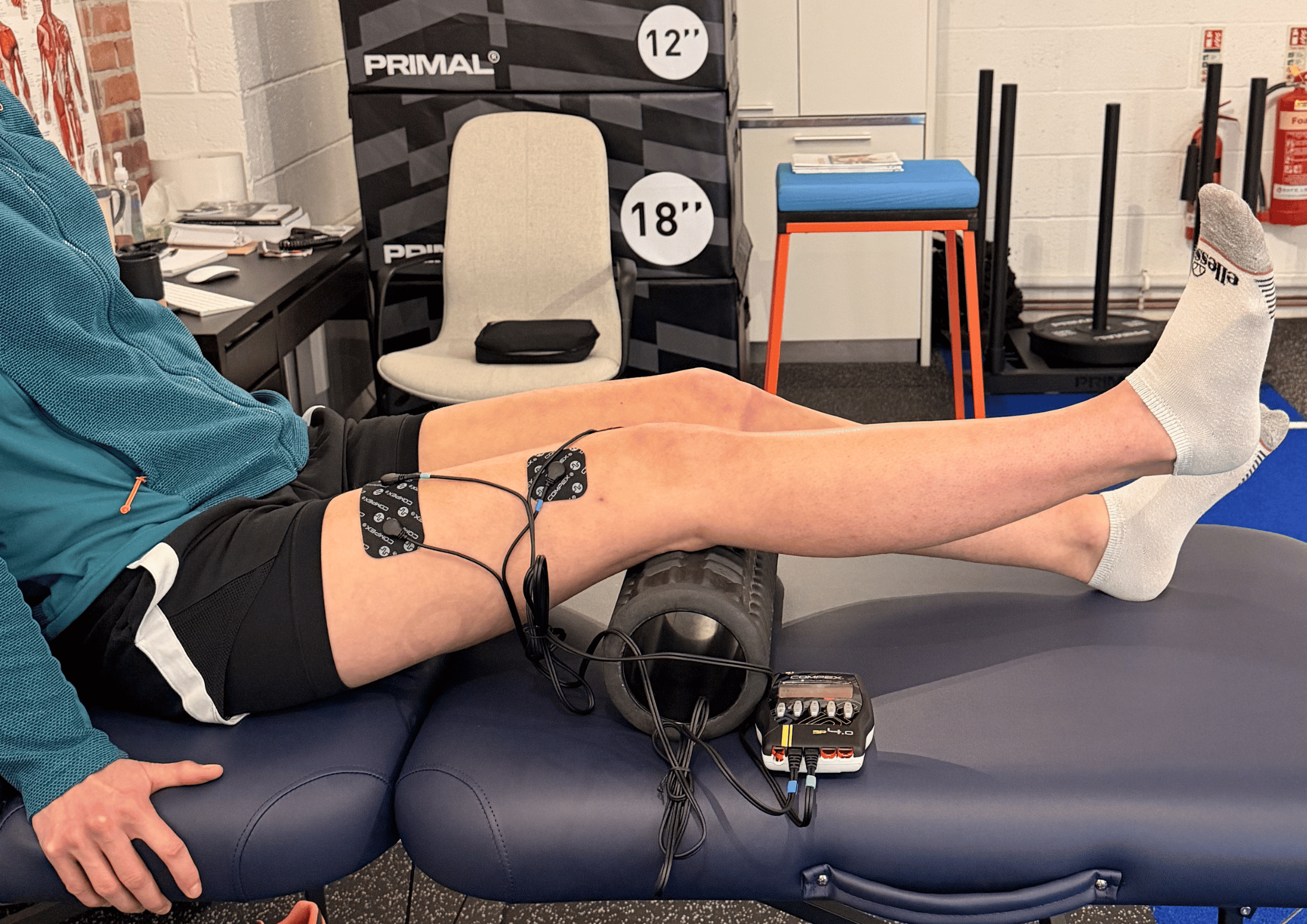
In some situations I use additional techniques alongside progressive rehabilitation exercises to support muscle activation and strength development.
Neuromuscular Electrical Stimulation
Neuromuscular electrical stimulation using devices such as Compex may be used to assist quadriceps activation, particularly during early rehabilitation when muscle inhibition is common following ACL injury or surgery.
Blood Flow Restriction Training
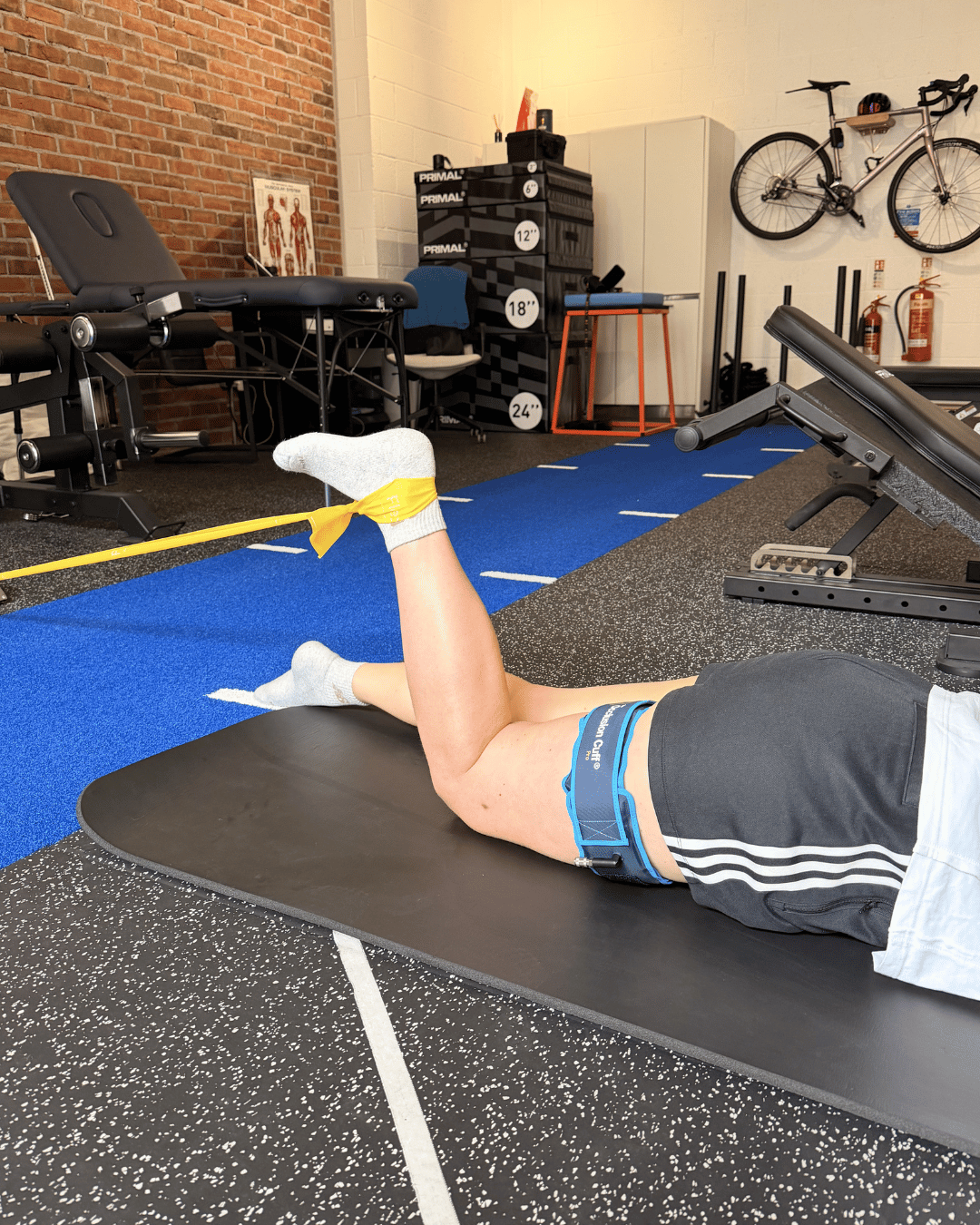
Blood flow restriction (BFR) training uses specialised occlusion cuffs to partially restrict blood flow during low-load exercises. This allows strength adaptations to be stimulated using lighter loads, which can be useful during earlier stages of rehabilitation when heavier resistance training may not yet be appropriate.
ACL Rehabilitation at ADAPT. PERFORM.
ADAPT. PERFORM. is a Bristol-based physiotherapy and performance clinic specialising in sports injury rehabilitation and strength-based recovery. Based in St Paul's, I work with athletes across Bristol — including Cotham, Redland, Bishopston, Montpelier and Clifton.
ACL rehabilitation programmes combine physiotherapy, progressive strength training and performance-focused rehabilitation to support individuals returning to activity safely. Each programme is tailored to the individual and aims to restore strength, movement and confidence for long-term knee health.
If you are experiencing knee instability or recovering from ACL injury or surgery, physiotherapy can help guide your rehabilitation and return to activity.
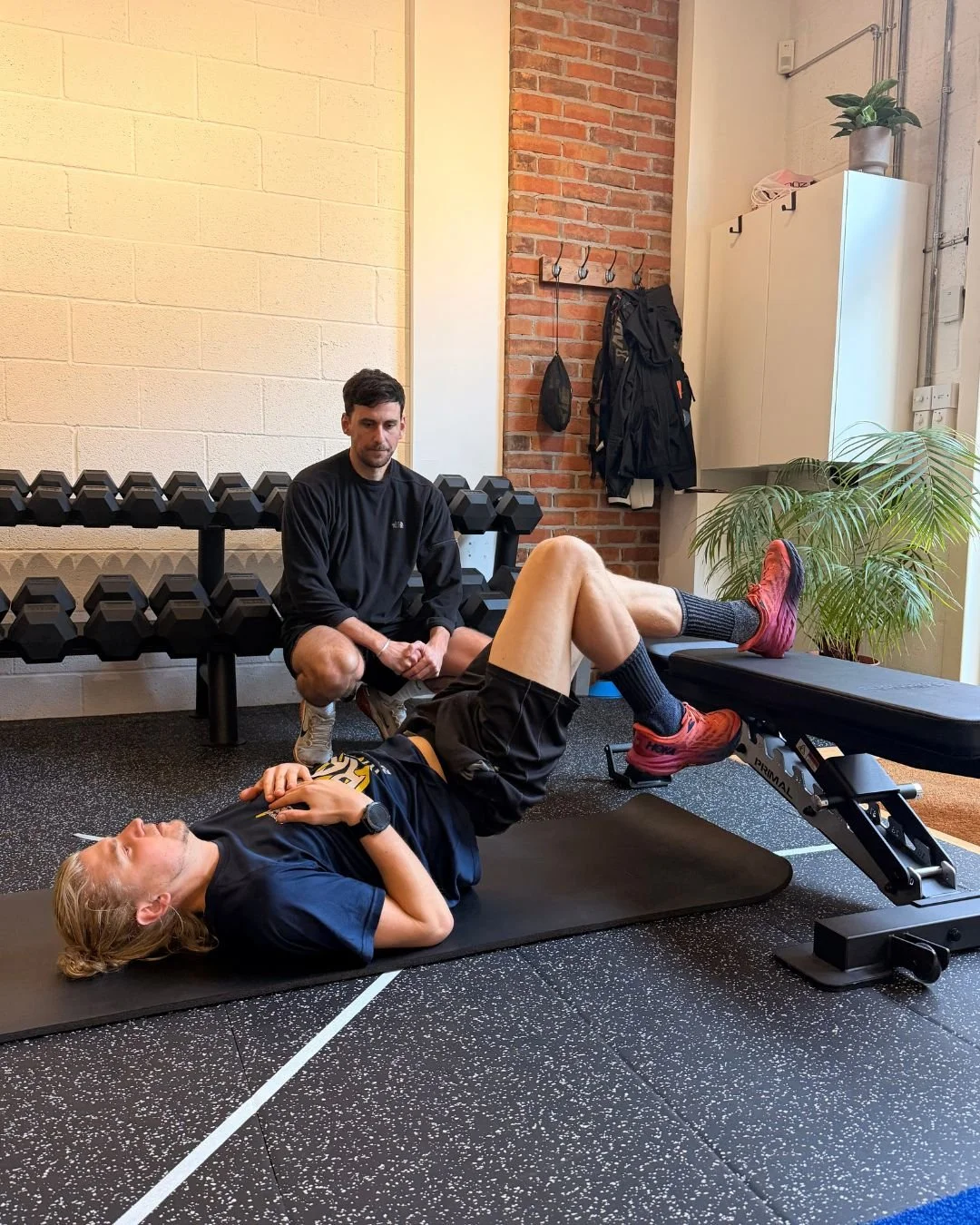
Ready to Start Your ACL Rehabilitation?
Whether you're newly injured and weighing up your options, preparing for surgery and wanting structured prehab, recovering post-operatively, or approaching return to sport and needing objective criteria-based assessment — I can help.
Based in St Paul's, Bristol BS2, I work with people at every stage of ACL rehabilitation using the same standard of care provided to professional athletes — objective testing, criteria-based progression, and a clear plan from first assessment to full return.
See appointment options and pricing →