
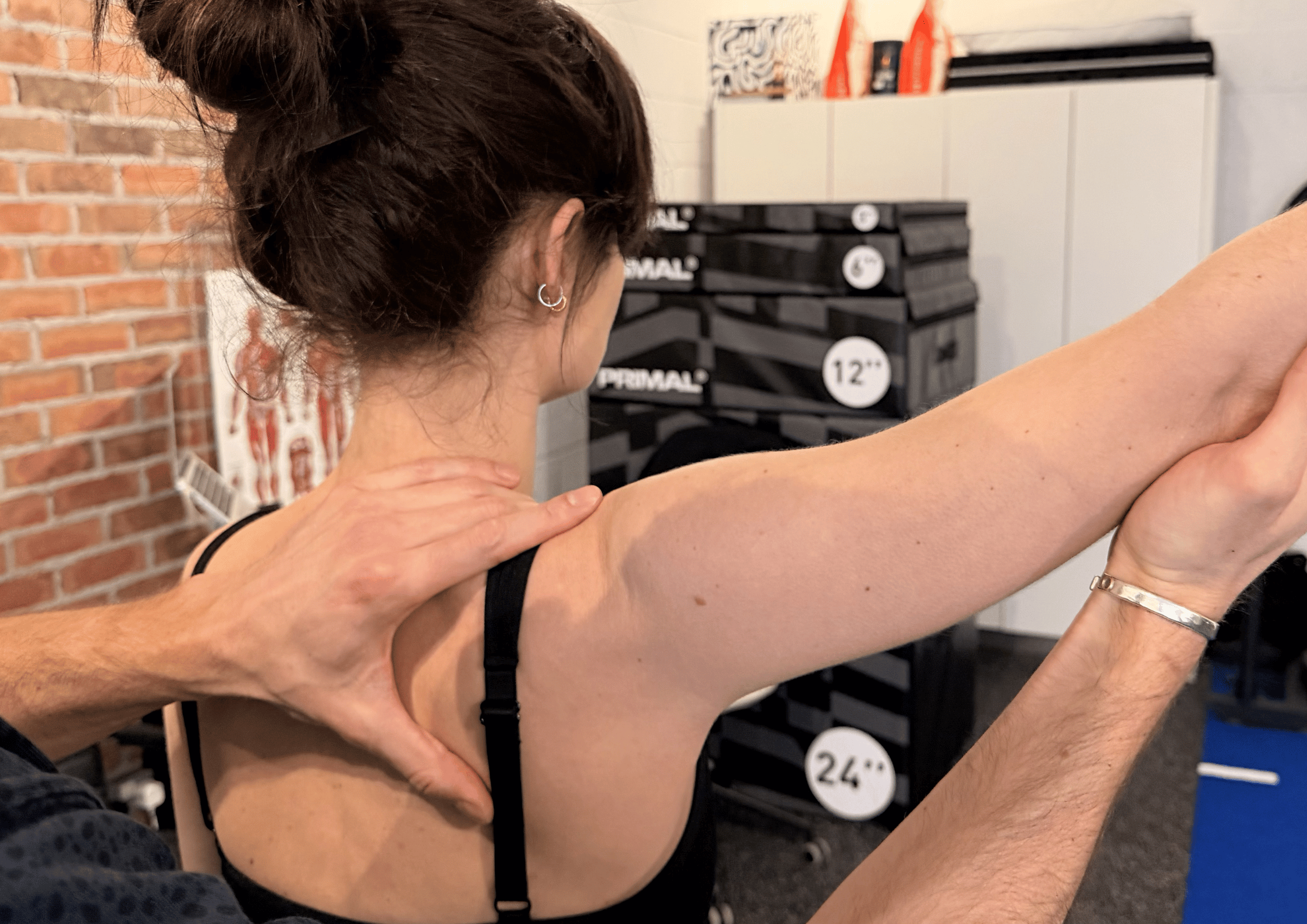
Shoulder Pain Physiotherapy in Bristol
Post-Operative Rehab, Rotator Cuff, Frozen Shoulder & Sports Injuries at ADAPT. PERFORM.
Shoulder pain can affect everything from sleep and desk work to pressing in the gym, swimming, throwing, or contact sport. Whether your symptoms developed gradually or followed surgery or trauma, structured rehabilitation is key to restoring strength, control and performance.
At ADAPT. PERFORM., based in St Paul’s, Bristol BS2, we provide evidence-based shoulder physiotherapy in Bristol — combining movement assessment, progressive strengthening and performance-led rehabilitation to help you return stronger than before.
Not sure what to expect at your first appointment? Find out here →
Common Shoulder Conditions I Treat
I regularly support clients across Bristol with:
Rotator cuff related shoulder pain
Subacromial pain syndrome
Frozen shoulder (adhesive capsulitis)
Shoulder instability
Post-operative shoulder rehab
Labral injuries
AC joint pain
Gym-related shoulder overload
Throwing and contact sport injuries
Shoulder pain is rarely “just inflammation” — it is often a capacity issue that requires progressive loading.
Why Shoulder Pain Develops
The shoulder is designed for mobility — but that mobility requires strength and control.
Common contributing factors include:
Reduced rotator cuff strength
Poor scapular control
Sudden spikes in training volume
Repetitive overhead loading
Poor post-operative progression
Fear of movement after injury
Research increasingly supports active rehabilitation over passive-only treatment. For most non-traumatic shoulder pain, strengthening programmes show comparable outcomes to surgery in the medium term.
The key is progressive loading — not prolonged rest.
Is It Really Shoulder Pain?
The shoulder is one of the most complex regions in the body to assess, partly because pain felt in the shoulder region can originate from several different structures — some of which are not in the shoulder at all. Correct identification of the pain source is essential before any rehabilitation begins.
Conditions that commonly refer pain to the shoulder include:
Cervical spine — C5 and C6 nerve root irritation refers pain into the lateral shoulder, upper arm and elbow, often mimicking rotator cuff pathology or subacromial impingement
Thoracic outlet syndrome — compression of the brachial plexus or subclavian vessels in the thoracic outlet produces arm, shoulder and neck symptoms, particularly in overhead athletes
Acromioclavicular (AC) joint — often misidentified as glenohumeral or rotator cuff pain; AC joint pathology typically produces localised pain at the top of the shoulder
Referred diaphragmatic pain — right shoulder tip pain can occasionally indicate diaphragmatic irritation or visceral referral requiring medical assessment
Thoracic spine dysfunction — mid-thoracic stiffness is a common contributing factor in shoulder presentations, particularly in overhead athletes and swimmers
For overhead athletes — CrossFit, Olympic lifting, swimming, throwing — shoulder assessment at ADAPT. PERFORM. includes cervical and thoracic screening as standard, given how frequently cervical referral and thoracic restriction contribute to shoulder symptoms in this population.
How I Assess Shoulder Pain in Bristol
At ADAPT. PERFORM., assessment includes:
Range of motion testing
Strength profiling (rotator cuff & scapular muscles)
Functional pressing or pulling assessment
Load tolerance in gym movements
Stability and control screening
I identify whether symptoms are primarily:
Load-related
Stability-related
Postoperative deconditioning
Or mobility-driven
This allows us to individualise your rehabilitation plan.
Evidence-Based Recovery Timeframes
Shoulder rehabilitation timelines vary significantly depending on the presentation. These are general guides based on current evidence:
Rotator cuff related pain / subacromial pain syndrome: many people see meaningful improvement within 6–12 weeks with a structured loading programme
Frozen shoulder (adhesive capsulitis): recovery typically takes 12–24 months across three stages — freezing, frozen and thawing. Physiotherapy helps manage pain and restore movement at each stage
Shoulder instability (non-surgical): structured strengthening programmes over 12–16 weeks are effective for many people, particularly those with hyper-mobility instability
Post-operative rotator cuff repair: return to light activity typically 3–6 months; full return to sport or overhead loading 6–12 months depending on the extent of the repair
Post-operative shoulder stabilisation: return to contact sport typically 6–9 months with criteria-based progression
These timeframes are guides. Progression should be based on strength, function and load tolerance — not time alone.
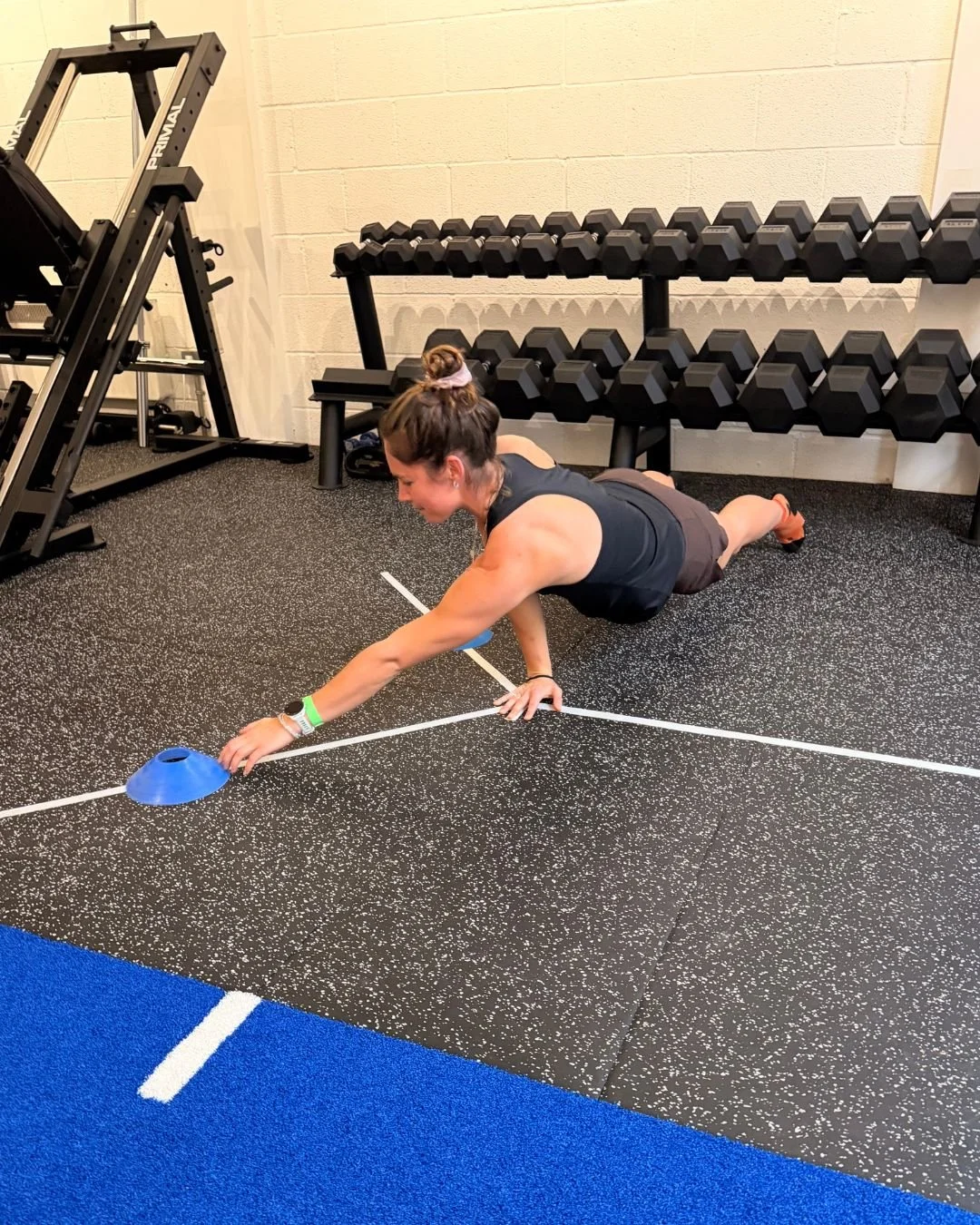
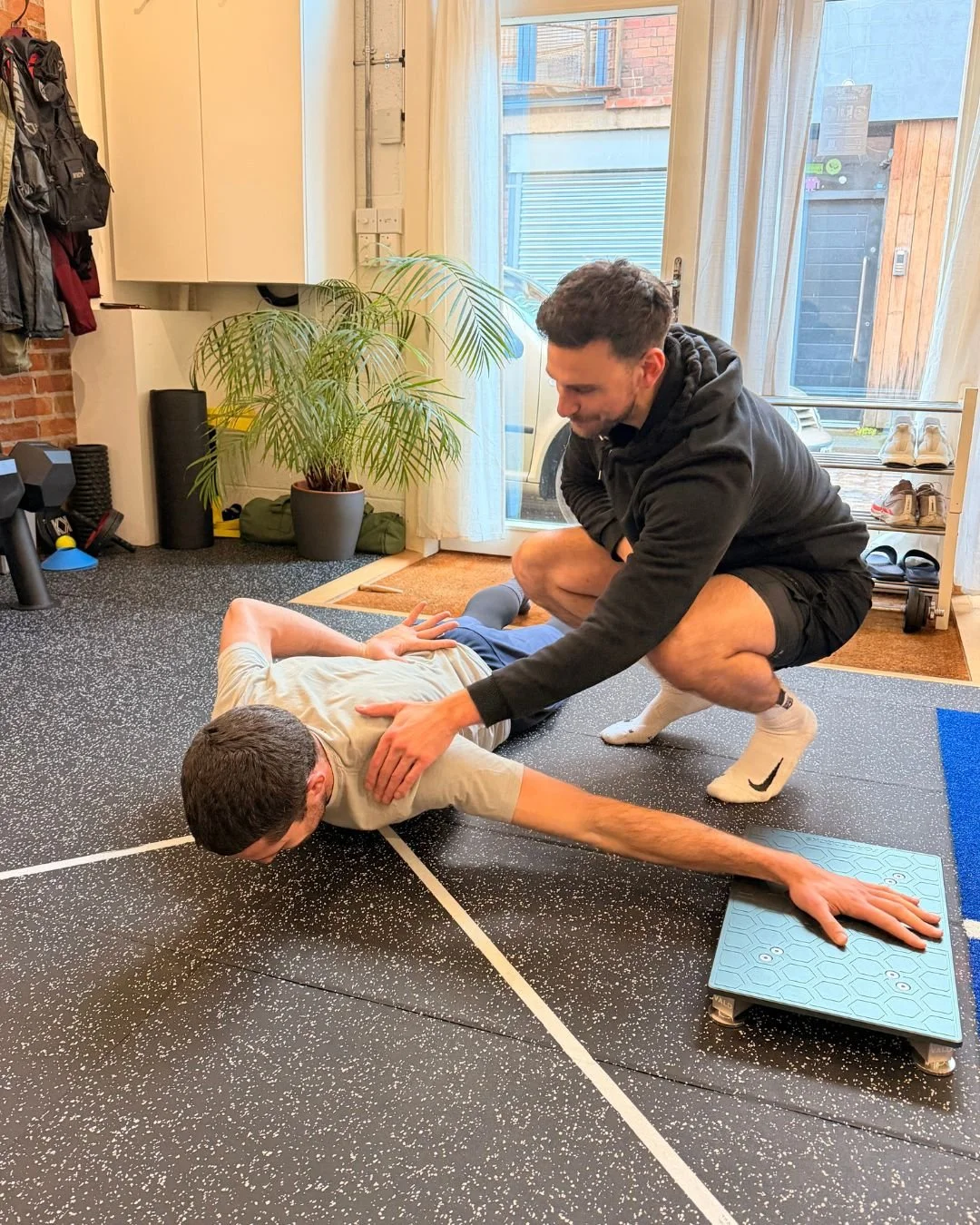
The ADAPT. PERFORM. APPROACH
I follow our ADAPT → RECOVER → PERFORM structure.
ADAPT
I listen to your history, training background and goals. Education is key — particularly around reducing fear of overhead movement.
RECOVER
Early-stage rehab may include:
Pain-modulated loading
Isometric strengthening
Controlled mobility
Manual therapy and taping where appropriate
For frozen shoulder, recovery requires patience and progressive mobility work over months rather than weeks.
For post-operative cases, I respect surgical timelines while preventing excessive deconditioning.
PERFORM
Once symptoms settle, I progress toward:
Overhead strength
Horizontal pressing capacity
Pulling strength symmetry
Sport-specific drills
Return-to-contact preparation
For gym athletes, swimmers and throwing sport athletes, this phase includes sport-specific loading, overhead pressing progressions, and return-to-sport criteria. For post-surgical patients, progression is milestone-based — guided by strength symmetry and functional capacity rather than time.
Evidence-Based Recovery Timeframes
Recovery depends on condition and severity.
Rotator Cuff Related Pain
Structured strengthening programmes typically show meaningful improvement over 6–12 weeks, with continued gains beyond that.
Frozen Shoulder
Natural history often spans 6–18 months, but structured physiotherapy can improve mobility and function throughout each stage.
Post-Operative Shoulder Surgery
Early protection phase: 0–6 weeks
Strength rebuilding: 6–16 weeks
Return to higher-level sport: often 4–6 months+
Shoulder Instability
Progressive strengthening and neuromuscular control work over 12–16 weeks is typically required before return to full sport.
Timelines are guides — progression should be based on strength and function, not simply time.
Return to Gym & Sport
Before returning fully to:
Bench press
Overhead press
Pull-ups
Contact sport
Throwing or swimming
You should demonstrate:
Rotator cuff strength symmetry
Scapular control under load
Repeated overhead tolerance
Confidence in dynamic movement
Pain-free does not equal performance-ready.
When Should You Seek Physiotherapy?
Consider assessment if:
Shoulder pain persists beyond 2–3 weeks
Pain wakes you at night
You feel weakness or instability
Gym movements repeatedly flare symptoms
You’re unsure how to progress post-surgery
Early structured rehab reduces chronicity and re-injury risk.
Why Choose ADAPT. PERFORM. for Shoulder Pain in Bristol?
I combine:
Clinical physiotherapy expertise
Progressive strength principles
Performance-focused progression
Clear rehabilitation staging
Whether your goal is pain-free daily life or returning to heavy pressing and sport, I tailor rehabilitation to your capacity and performance demands.
In-Person Physiotherapy
Strength & Conditioning
Performance Testing & Analysis
Neck Pain
Ready to Address Your Shoulder Pain?
Based in St Paul’s, Bristol BS2, I work with people managing shoulder pain across the city — from gym athletes and swimmers to those recovering from rotator cuff surgery or dealing with persistent pain that’s limiting daily life.
Book your initial assessment and leave with a clear understanding of what’s driving your symptoms and a structured plan to move forward.
See appointment options and pricing →