
Knee Pain Physiotherapy in Bristol
ACL Rehabilitation, Post-Operative Recovery & Sports Knee Injuries at ADAPT. PERFORM.
Knee pain is one of the most common reasons people seek physiotherapy in Bristol. Whether you’re recovering from surgery, managing a tendon issue, dealing with a running-related overuse injury, or simply struggling with pain that’s affecting your daily life — structured rehabilitation is essential for restoring strength, symmetry and performance.
At ADAPT. PERFORM., I combine physiotherapy, objective strength testing and progressive performance training to help you return not just pain-free — but performance-ready. That applies whether you’re an athlete preparing to return to competition or someone who just wants to walk to the shops without discomfort.
Not sure what to expect at your first appointment? Find out here →
Knee Conditions I Treat in Bristol
I regularly support clients in Bristol with:
Conservative ACL management
Meniscus injuries (conservative and post-repair)
Ligament sprains (MCL, LCL)
Patellar tendon pain (jumper’s knee)
Knee osteoarthritis (OA) - age and degenerative related changes
Runner’s knee (patellofemoral pain and Iliotibial band (ITB) pain)
Post-operative total knee replacement (TKR) and partial knee replacement (PKR)
Overuse injuries from sports - running, football, Hyrox, tennis, cycling and gym training
Every knee injury presents differently. The key is understanding what capacity has been lost — and rebuilding it safely.
Why Knee Pain Develops
Knee pain often develops when load exceeds tissue capacity. This may occur due to:
Sudden increases in training intensity or volume
Inadequate rehabilitation after injury
Reduced quadriceps strength
Poor landing or running mechanics
Post-operative muscle inhibition
Tendon overload
Research consistently shows that weakness and strength asymmetry are major predictors of delayed return to sport following injury. Similarly, persistent knee pain is strongly linked to inadequate load progression rather than inflammation alone.
Pain is often a signal that the knee’s tolerance to force needs rebuilding — not simply that something is “damaged.”
Is It Really Knee Pain?
Pain felt around the knee doesn't always originate from the knee itself. Several conditions can produce localised or diffuse knee pain that closely mimics local pathology — and treating the wrong source will delay recovery regardless of how good the rehabilitation is.
Common conditions that refer pain to the knee include:
Lumbar spine — L3 and L4 nerve root irritation can refer pain to the front and inner aspect of the knee, often mistaken for patellofemoral or medial compartment pathology
Hip joint pathology — particularly anterior hip and groin pain that radiates into the medial knee
Proximal hamstring tendinopathy — can present as deep ache pain in the posterior knee and upper leg pain, especially in runners
Peripheral nerve sensitivity — sciatic or femoral nerve irritation can produce diffuse leg pain that localises around the knee
Vascular referral — less common, but worth screening in appropriate presentations
Part of a thorough knee assessment at ADAPT. PERFORM. is ruling out referred and radicular sources before deciding where to direct rehabilitation. If your knee pain hasn't responded to previous treatment, or doesn't fit a clear pattern, referred pain is often worth exploring.
How I Assess Knee Pain in Bristol
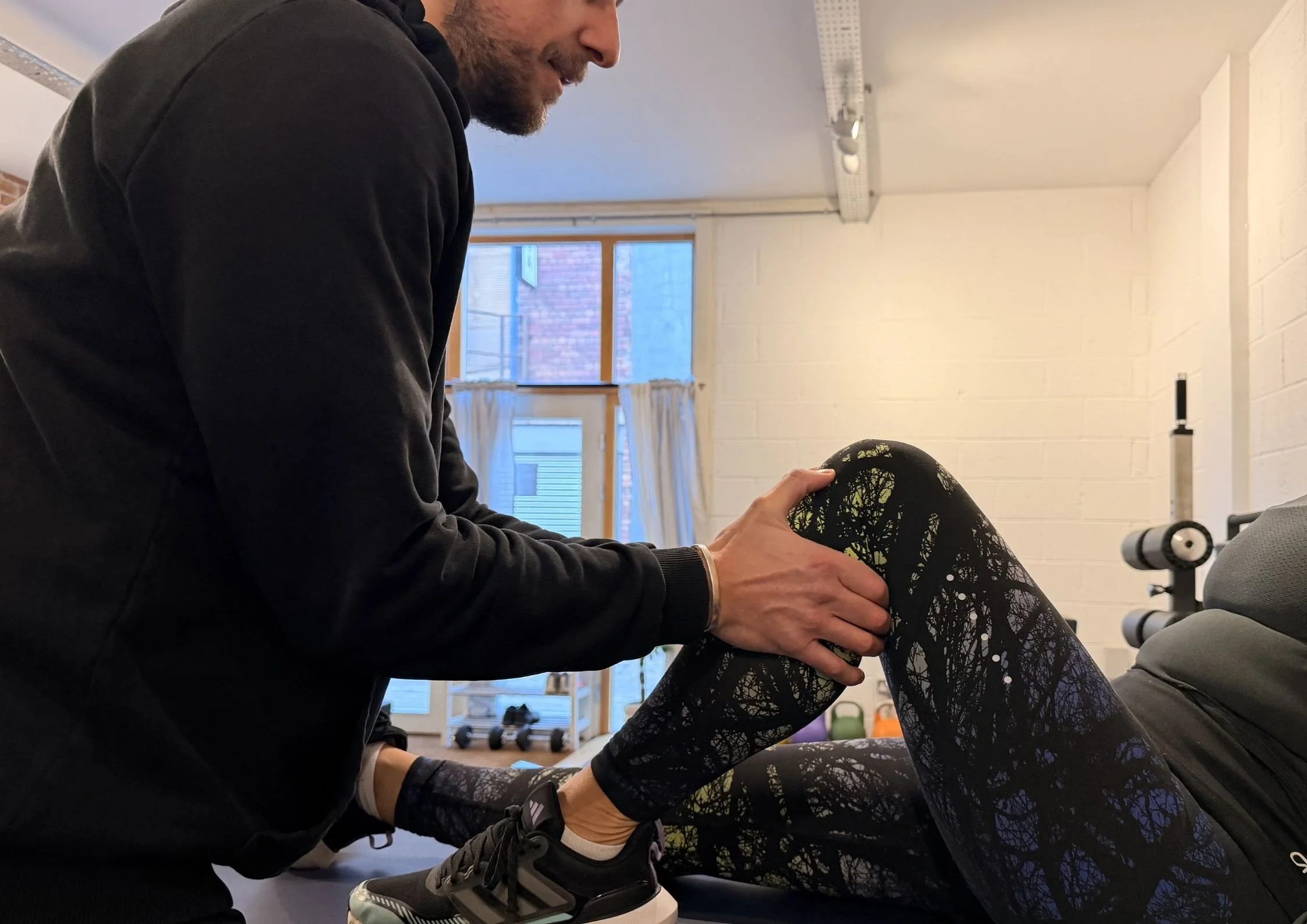
At ADAPT. PERFORM., knee assessment goes beyond range of motion.
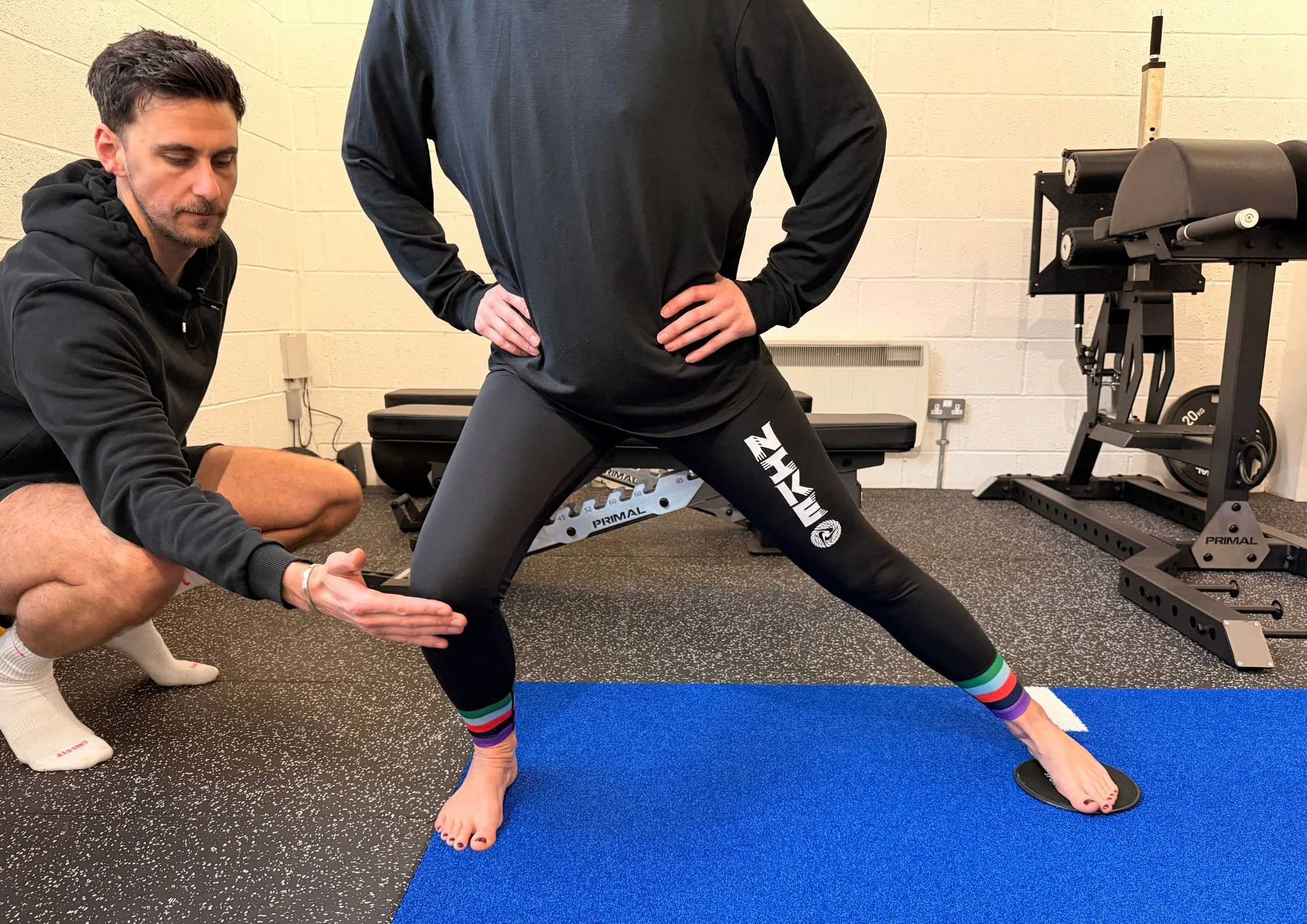
Your session may include:
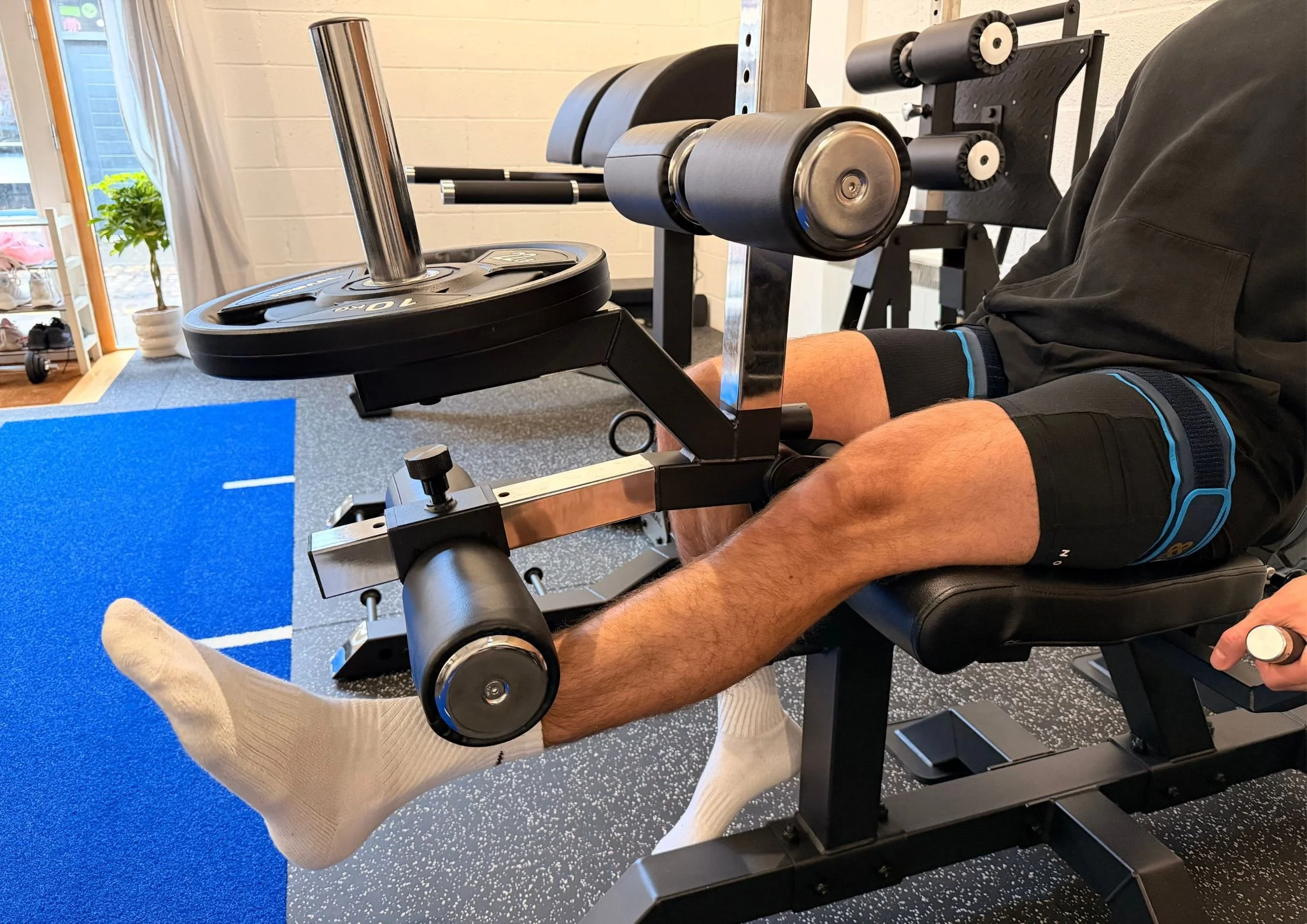
Strength testing (including quadriceps and hamstrings)
Symmetry comparisons between limbs
Load tolerance profiling
Return-to-run and sport readiness screening
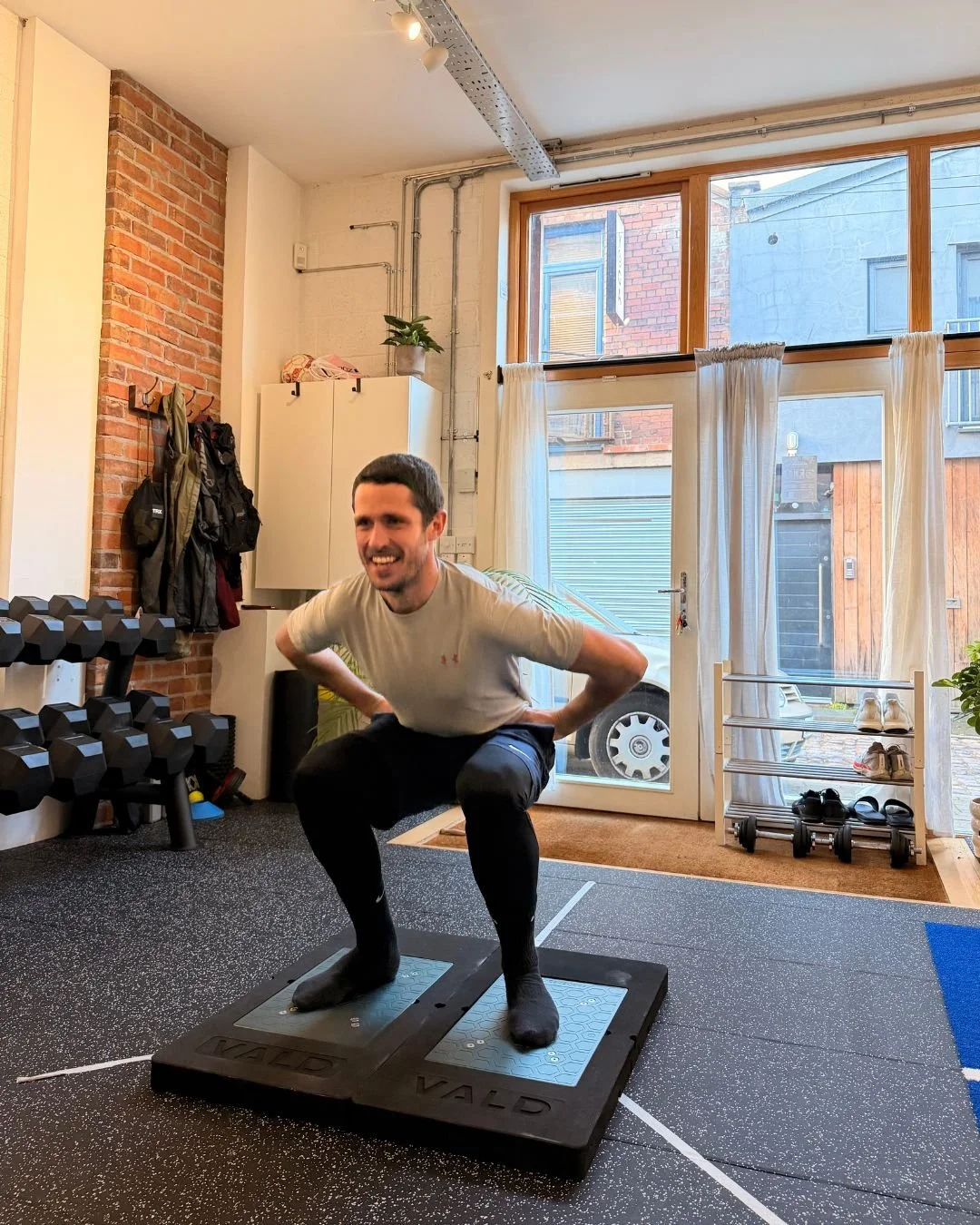
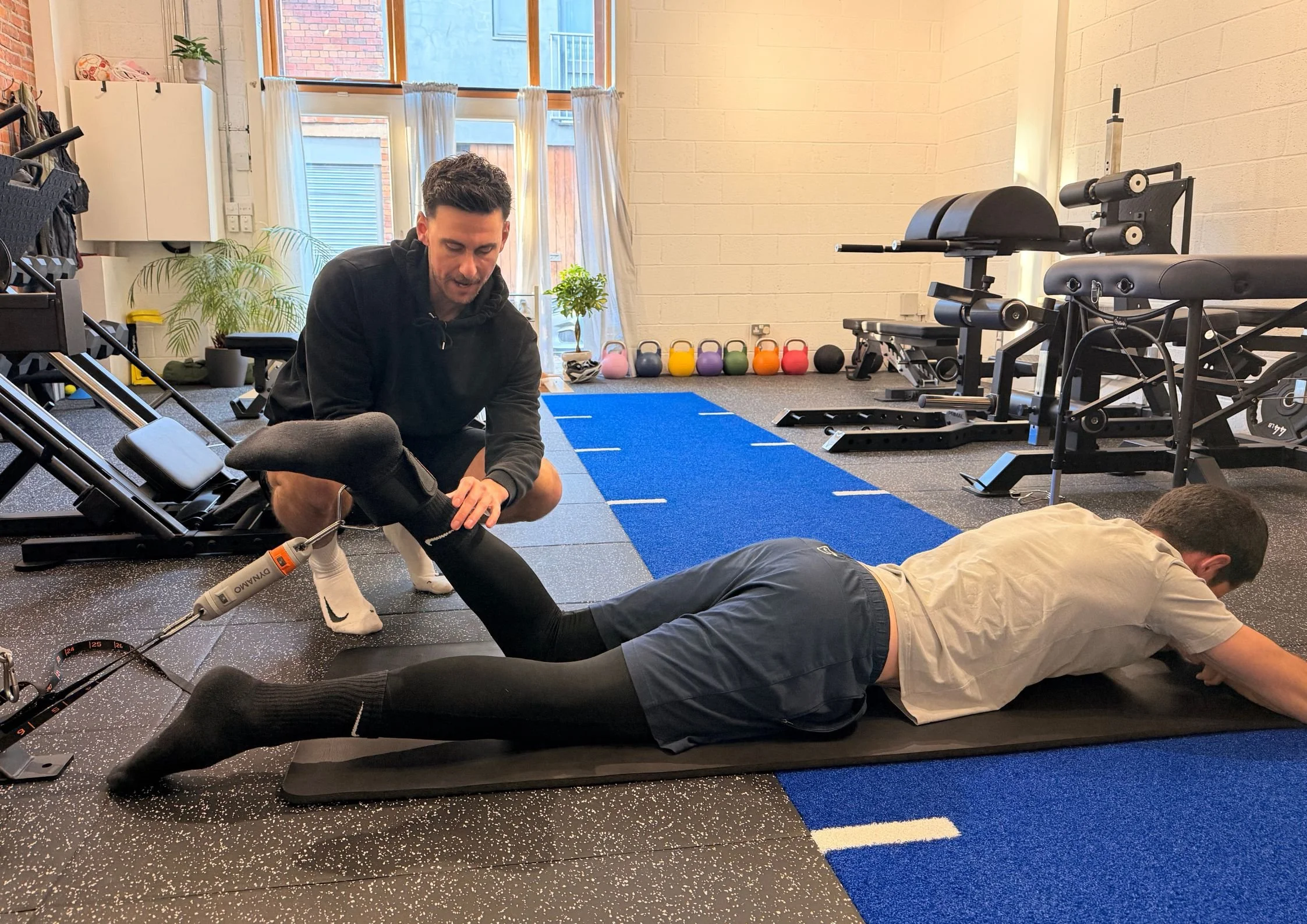
Where appropriate, I use objective strength testing with dynamometry and force plate analysis to guide progression. This removes guesswork — particularly in post-operative ACL or tendon rehabilitation — and gives you clear, measurable data on where you are and what needs to improve before returning to activity.
The ADAPT. PERFORM. Treatment Framework
I follow a structured, performance-based model:
ADAPT
I take time to understand your injury history, surgical background (if applicable), training goals and current limitations. Education is central — especially around timelines and expectations.
RECOVER
Early-stage rehab focuses on restoring movement, reducing swelling and gradually rebuilding strength. Manual therapy may be used when appropriate, but long-term progress relies on progressive loading. For tendon-related knee pain, research supports heavy slow resistance training over purely passive approaches.
PERFORM
Once baseline strength improves, rehabilitation progresses to:
Plyometrics
Change-of-direction drills
Running progressions
Sport-specific loading
Return-to-sport testing
This stage is often where rehab is prematurely stopped — leading to recurrence or re-injury.
For athletes returning to competitive sport, I apply objective return-to-sport criteria — limb symmetry benchmarks, force plate data and functional testing — to ensure you’re genuinely ready, not just symptom-free.
| Condition | Typical timeline | Key notes |
|---|---|---|
| ACL Reconstruction | 9 – 12 months | Return to pivoting sport before 9 months significantly increases re-injury risk. Progression is based on strength symmetry and functional testing — not time alone. |
| Meniscus Repair | 3 – 6 months | Dependent on surgical protocol and individual loading tolerance. Weight-bearing and rehab progression varies by repair type. |
| Patellar Tendon Pain | 12 – 16 weeks | Structured heavy slow resistance loading programmes typically required for meaningful improvement. Passive rest alone is ineffective and may slow recovery. |
| Patellofemoral Pain (Runner's Knee) | 6 – 12 weeks | Load management and strength work targeting quadriceps and hip are first-line. Most people see significant improvement within this window with consistent rehab. |
| MCL Sprain | 4 – 10 weeks | Grade I–II sprains typically managed conservatively. Return to sport guided by strength, stability and pain-free loading. Grade III may require longer. |
| Total Knee Replacement | 6 – 12 months | Walking ability often improves within 6 – 12 weeks post-surgery. Strength and full function continue improving for up to 12 months with structured rehabilitation. |
| ITB Syndrome | 4 – 8 weeks | Common in runners and cyclists. Load management, hip strengthening and running mechanics assessment typically resolve symptoms within this timeframe. |
These timeframes are evidence-based guides. Individual recovery depends on injury severity, history and rehabilitation consistency. Progression should always be criteria-based, not time-based alone.
Evidence-Based Recovery Timeframes
Recovery timelines vary considerably depending on the specific injury, surgical history and individual loading tolerance. The figures below are evidence-based guides drawn from the published literature - not guarantees. In every case, progression should be criteria-based rather than time-based alone.
Return to Performance & Testing
Pain reduction is only the first milestone.
Before returning to competitive sport, I look for:
Quadriceps & hamstring symmetry (ideally ≥90% limb symmetry)
Single-leg hop control
Reactive strength and landing mechanics
Confidence in cutting, pivoting, and acceleration
Objective assessment helps reduce re-injury risk and improves confidence.
At ADAPT. PERFORM., I believe “pain-free” does not automatically mean “performance-ready.”
Learn more about Return to Running After Injury.
When Should You Seek Physiotherapy?
You should consider knee assessment if:
Pain persists beyond 1-2 weeks
You’ve had surgery and feel unsure how to progress
You’re struggling to return to running or sport
Your knee feels unstable or weak
You’ve been told to rest but symptoms continue
Early intervention often leads to better long-term outcomes.
Why Choose ADAPT. PERFORM. for Knee Pain in Bristol
Most knee pain rehab stops when pain stops. At ADAPT. PERFORM., that’s just the beginning.
Based in St Paul’s, Bristol BS2, I provide physiotherapy and performance rehabilitation that takes you from first assessment through to full return — whether that means returning to the top level of your sport, running your first 5k, or getting back to daily life without restriction.
Every person I work with receives the same standard of care — objective strength testing, force plate data, progressive programming and evidence-based recovery guidance. Not because they’re a professional athlete. Because it’s the right way to do it.
Knee Pain - Frequently Asked Questions
-
Recovery depends on the specific injury and individual factors, but most non-traumatic knee pain begins to improve within 4-8 weeks of structured rehabilitation. Tendon-related knee pain, post-surgical rehabilitation and complex cases typically take longer - 12 weeks to 12 months depending on the condition. The recovery timeline table earlier on this page gives evidence-based guides for the most common presentations. The most important factor is consistent loading rather than rest alone.
-
If pain has lasted longer than 1-2 weeks, is recurring, or is affecting your ability to train, work or sleep, an assessment is worthwhile. Early intervention generally leads to faster, more complete recovery and reduces the likelihood of compensatory patterns developing. If pain is severe, accompanied by significant swelling, instability or locking, you should seek assessment promptly.
-
Sometimes, yes - but it depends on the type of pain and how it behaves. Pain that settles quickly after activity and doesn't worsen day-to-day is often manageable with adjusted training. Pain that increases through a run, lasts more than 24 hours afterwards, or causes you to alter your gait is a signal to modify training and seek assessment. Continuing to run through worsening pain can prolong recovery considerably.
-
Usually not. Most knee pain can be assessed clinically through a thorough history, physical examination and movement testing. Imaging is helpful in specific situations - significant trauma, suspected fracture, suspected ligament rupture, locking or persistent symptoms not responding to treatment - but for most presentations, structured rehabilitation can begin immediately and imaging is only requested when it would change the management plan.
-
This varies considerably depending on the injury and your goals. Straightforward presentations may need 3-5 sessions across 6-8 weeks. More complex rehabilitation - post-surgical, tendon-related or sports return-to-play - may involve 8-12+ sessions over several months. At your initial assessment I'll give you a clear estimate based on what we find. My pathways are designed to give clients structured rehabilitation across longer timeframes where appropriate.
-
Yes - and the evidence here is strong. Exercise-based rehabilitation, strength training and load management are recommended as first-line treatment for knee osteoarthritis by NICE, OARSI, and other international guidelines. Physiotherapy doesn't reverse the structural changes seen on a scan, but it consistently reduces pain, improves function and increases activity capacity in people living with OA. For many, it delays or removes the need for surgical intervention.
-
Returning to pivoting sport before achieving objective strength and movement criteria significantly increases the risk of re-rupture or contralateral ACL injury. Time alone is not a reliable indicator of readiness - many people feel 'fine' at 6 months but still have meaningful strength asymmetries. Force plate testing, dynamometry and functional hop tests give an objective picture of where you actually are versus where you feel you are. This is the standard of care in elite sport and increasingly recognised as essential for amateur and recreational athletes too.
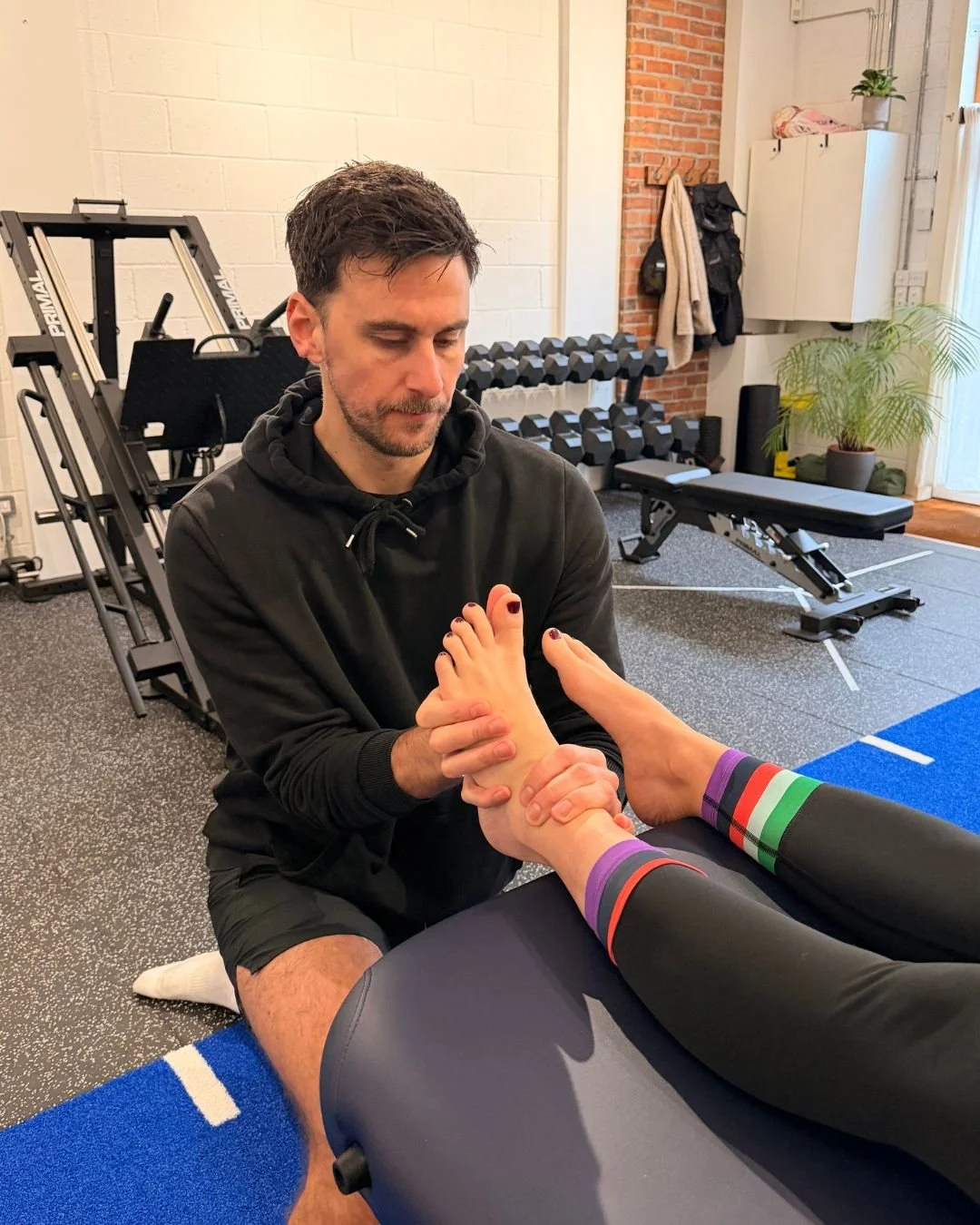
In-Person Physiotherapy
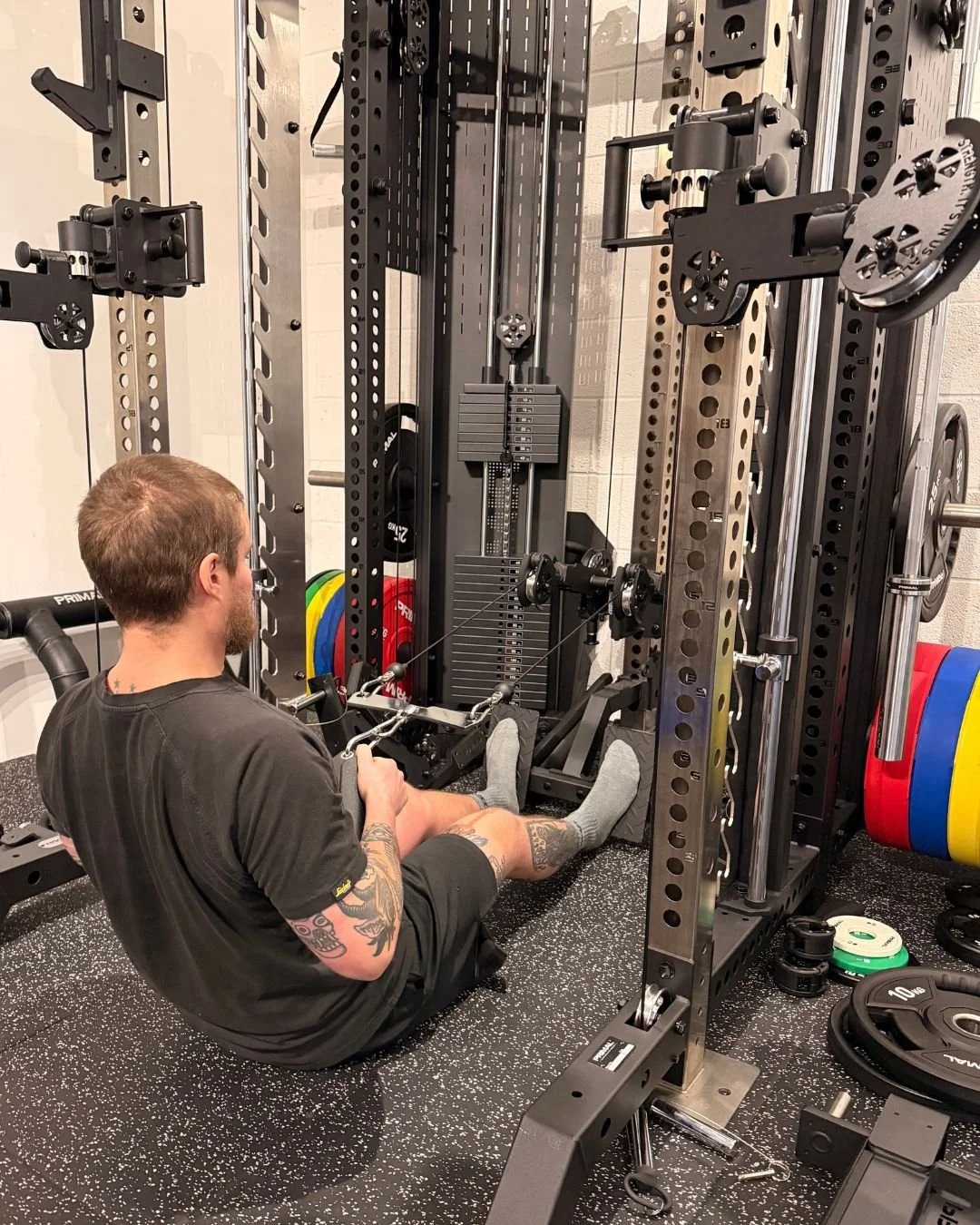
Strength & Conditioning
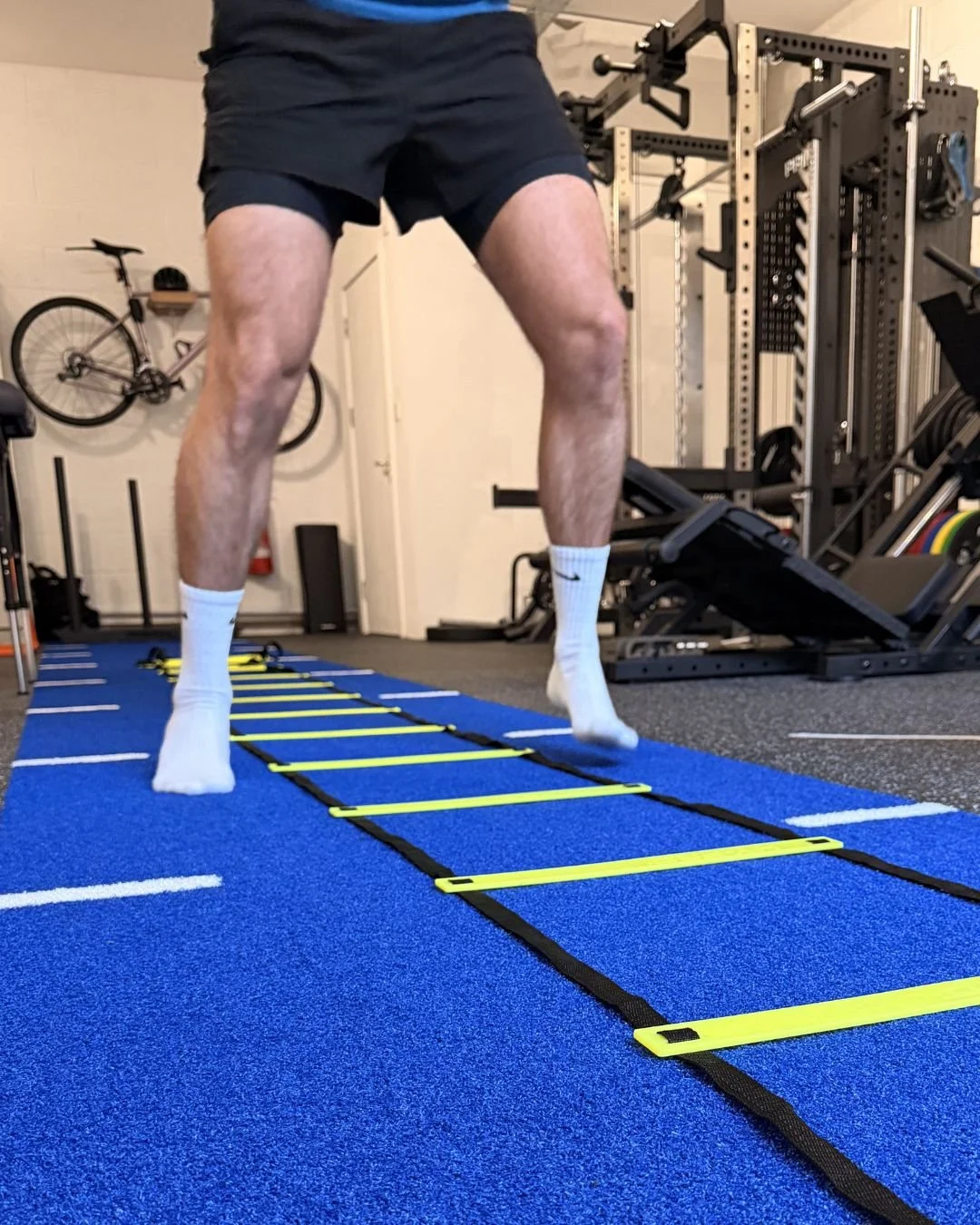
Performance Testing & Analysis
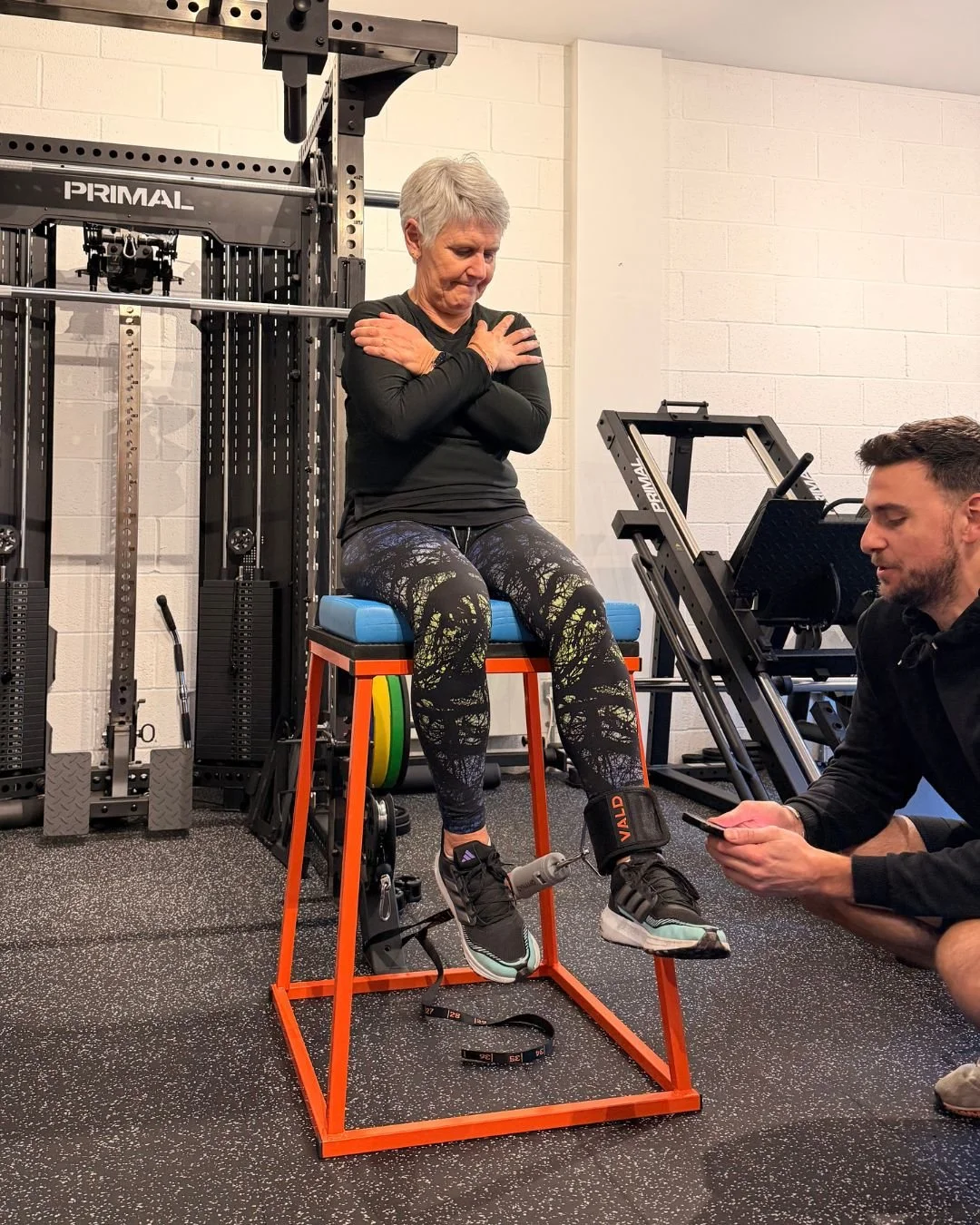
ACL Rehabilitation
Ready to Address Your Knee Pain?
Based in St Paul's, Bristol BS2, I work with people across the city — from competitive athletes and runners to those recovering from surgery or simply struggling with pain that's affecting their daily life.
Book your initial assessment and leave with a clear understanding of what's driving your knee pain and a structured plan to move forward.
See what to expect at your first appointment →
See appointment options and pricing →