
Your Nutrition Game Plan for the AJ Bell Great Bristol Run Half Marathon
Half Marathon Nutrition, Hydration & Recovery — Calibrated to Your Pace
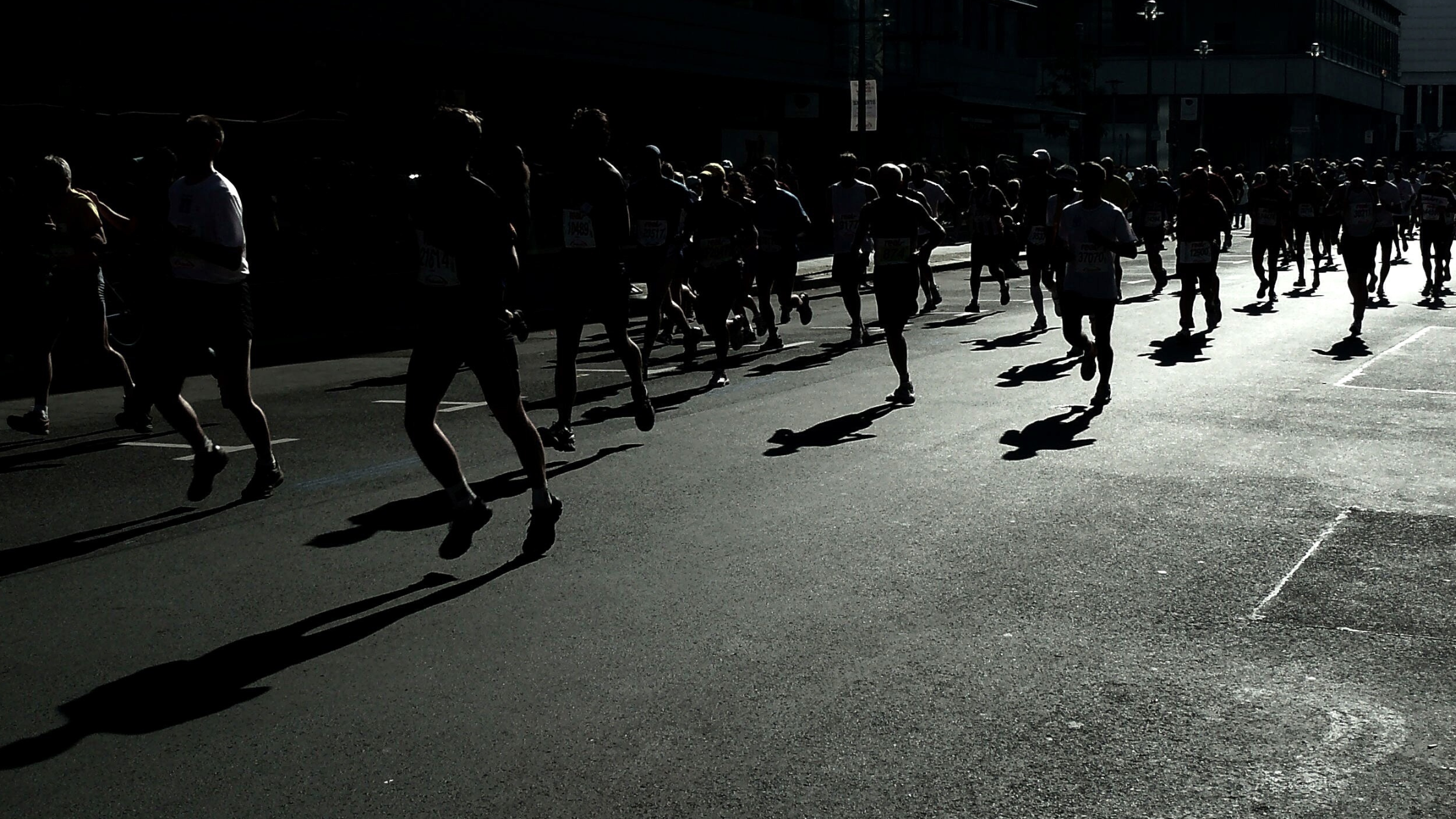
With the AJ Bell Great Bristol Run kicking off on Sunday 10th May, your training is hopefully starting to wind down. The hard graft is done. What separates a strong half marathon from a difficult one over those final few weeks is rarely fitness — it's fueling, hydration, and recovery.
I've been working with runners across Bristol — from Stokes Croft to Clifton, Easton to Westbury Park — preparing for this race, and the same questions come up every year. How much should I eat the night before? Do I actually need a gel? What about the morning of?
This guide breaks down what the current evidence says about pre-race nutrition, race-day fueling, and recovery — calibrated specifically to half marathon distance and scaled to your finish time, because what works for someone running 1:25 is not what works for someone running 2:15.
The Bristol Half is genuinely fast — fuel for it accordingly
It's known as one of the flatter half marathon routes in the country, taking you out on a lovely (reverse route from the usual) little tour of Bristol starting from Rupert Street and finishing at Anchor Road. Roughly 25,000 runners. Thousands of supporters. Music zones. It's a fast, atmospheric race designed for personal bests.
This year the half marathon sets off at 8:30am, which gives you a reasonable window for breakfast and pre-race fueling — it’ll be early morning so hopefully cooler but if were blessed with a great hot sunny day remember hydration matters more than people think, even on a flat course.

Carb loading — less than you think
The old advice of carb loading for a full week before a half marathon is outdated. For 21.1km, your glycogen stores are sufficient for most runners if you eat well in the 1–2 days before. The goal is to top up — not max out.
My target by finish time:
Sub 1:30 — 7–8 g of carbs per kg of bodyweight on the day before only. Normal eating on D-2.
1:30 to 2:00 — 7–10 g/kg the day before, slight increase the day before that.
2:00+ — 8–10 g/kg for both days. The longer you're out there, the more glycogen you'll burn.
For a 65kg runner targeting sub-1:30, that's around 455–520g of carbs the day before — easily hit with porridge for breakfast, a sandwich at lunch, pasta or rice in the evening, plus snacks like bananas, rice cakes, and a sports drink.
The fibre rule still applies. Reduce wholegrains, beans, lentils, and cruciferous veg from D-2 onwards. Switch to white rice, white pasta, white bread, bananas, and boiled potatoes. This isn't about nutrition dogma — it's about reducing GI bulk so you're not making detours to portaloos in the first 5km.
Race morning: 2–3 hours before the 10am start, aim for 1–3 g/kg of easily digestible carbs. Porridge with banana, white toast with jam, a sports drink. Familiar foods only. Race day is not the day to try something new.

Gels — pace-dependent, not one-size-fits-all
This is where most half marathoners get it wrong. They either take too many (GI distress), or none at all and take a massive dip in the final 5km.
By target finish time:
Sub 1:30 — 0–1 gels. Glycogen alone is usually sufficient. A carbohydrate mouth rinse at aid stations (5–10 second swill of a sports drink) gives a small performance benefit without GI risk. If you do take a gel, one at around 45–55 minutes is enough.
1:30–2:00 — 1 gel at around 50–60 minutes. With water. Don't wait until you feel like you need it.
2:00+ — 1 gel at 45 minutes, optional second at 90 minutes. Practice this in training.
Use a 3:1 maltodextrin-to-fructose blend gel. Glucose and fructose use different intestinal transporters, so combining them lets you absorb more without overwhelming the gut. Most decent gels (SiS, Maurten, Veloforte, Precision Fuel) tell you the ratio.
Always with water. Never dry. Unless the gels are formulated with sufficient water (check the label) or risk GI distress - cramping or nausea. And critically — I hope you have been practicing your gel strategy in training. One long run rehearsal prevents race-day surprises.
Hydration — drink to thirst, but plan ahead

The Bristol Half has four water stations on the course this year, plus two cooling showers. That's plenty of access. The trick is using them sensibly rather than reactively.
Pre-race (2 hours before start): 400–500 ml of water with electrolytes. Sip another 150–200 ml at the start line.
During the race: 300–600 ml/hour, depending on conditions. Drink to thirst as your baseline. Faster runners (sub 1:30) often find that 2–3 small sips at 2–3 stations is enough in cool conditions — too much fluid can slosh and slow you down.
In warm conditions (15–22°C), take fluid at every station, add an electrolyte tab to your pre-race drink, and use the cooling showers if your core temperature climbs.
Sodium matters even at this distance. Aim for 300–700 mg sodium per hour in warm conditions via electrolyte tabs, sodium-containing gels, or sports drinks. Plain water alone is not enough.
Want this protocol as a downloadable PDF? I've put everything in this guide — including pace-specific carb loading targets, hydration tables, and recovery timing — into a free downloadable guide. Sign up to my newsletter at the end of this post and I'll send it straight over.
Recovery — the evidence has changed
Here's where I want to push back on something most runners have heard for years: the "30-minute anabolic window" is largely outdated.
Recent research (Aragon & Schoenfeld; Burke, van Loon & Hawley; Schoenfeld 2018) shows the actual post-exercise window for recovery extends well beyond 30 minutes — up to 4–6 hours for endurance athletes. And critically, the priority post-race is carbohydrate first, protein second — not the 3:1 carb-to-protein ratio that's been preached forever.
The current evidence-based approach:
Carbs first: Aim for 1.0–1.2 g/kg/hour for the first 4 hours post-race. For a 65kg runner, that's roughly 65–80g of carbs per hour. High-GI carbs work best here.
Protein within 90 minutes: A single serving of around 0.3 g/kg (roughly 20g for a 65kg runner) is sufficient. Don't rush it. A proper meal — rice and chicken, bagel and eggs, pasta and fish — within 90 minutes ticks every box.
Daily protein target: 1.6–2.0 g/kg/day across the recovery week. Spread it across 3–4 meals.
My personal favourite recovery drink = Chocolate milk. It naturally hits a 3:1 carb-to-protein ratio, it's cheap, it's portable, and it's well-tolerated when appetite is suppressed after a hard race.
Sleep — the most underused recovery tool
If there's one thing I'd add to any runner's race-week plan, it's prioritising sleep in the 7–10 days before the race rather than just the night before.
Anticipatory arousal means most runners sleep poorly the night before a race. That's normal. The research shows that banking sleep in the days prior — adding 30–60 minutes per night from D-7 onwards — buffers against this. By the time you're trying to sleep on the Saturday night, the legs are already topped up.
A few simple sleep hygiene rules through Bristol Half week:
Cool, dark, quiet room (16–19°C is optimal)
Consistent bed and wake times — even on rest days
No screens 60 minutes before bed
No caffeine after 2pm (the half-life is 5–7 hours)
A 20–30 minute afternoon nap if you can manage it
Don't catastrophise a poor Saturday night. One bad night has minimal performance impact if you've banked sleep through the week.
The takeaway
You've trained for months. The fitness is there. The next two weeks are about not undoing it — getting fuel, hydration, and recovery right so you arrive on Anchor Road feeling fresh, fuelled, and ready to perform.
The most common mistakes I see are over-hydrating, over-fuelling, and trying something new on race day. Stick to what you've practiced, follow your pace-specific protocol, and trust the work you've already done.
Get the full Bristol Half Marathon Nutrition Protocol as a PDF
I've turned everything in this guide — plus the full hydration tables, sleep banking protocol, and recovery nutrition timing — into a clean, designed, downloadable PDF you can keep on your phone during race week.
[Sign up to my newsletter and I'll send it straight over]
No spam. Just one email a month with evidence-based training, nutrition, and injury insights for runners and athletes — written by a chartered physiotherapist and performance coach in Bristol.
Jonno Scott is a chartered physiotherapist and performance coach at ADAPT. PERFORM., based at 19 Backfields Lane, St Paul's, Bristol BS2 8QW. I work with runners, athletes, and strength sport athletes from across Bristol — from St Paul's, Montpelier, and Stokes Croft to Clifton, Redland, and Westbury Park. Bookings at adaptperform.co.uk or 0117 363 6384.
ADAPT. PERFORM. — Adapt Quicker. Recover Stronger. Perform Better.
